
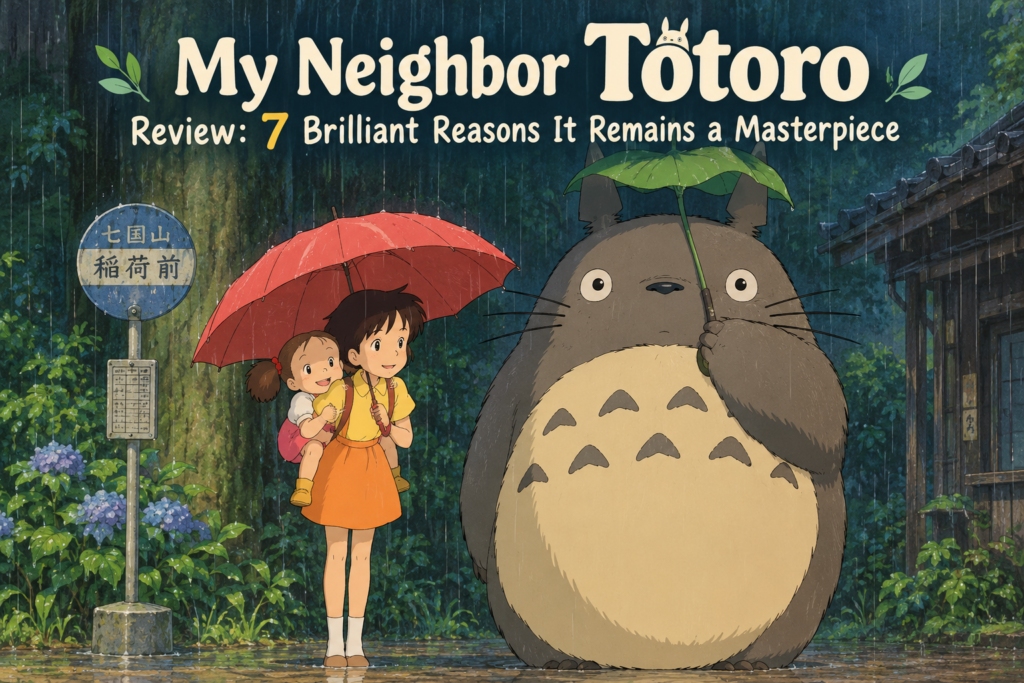
Capture the quiet wonder of childhood and the soothing magic of nature in our My Neighbor Totoro review, exploring Hayao Miyazaki and Studio Ghibli’s immortal 1988 classic. Set in rural 1950s Japan, this timeless hand-drawn 2D masterpiece bypasses traditional movie tropes, villains, and contrived conflicts to deliver a gentle, deeply moving celebration of family resilience, countryside exploration, and friendly forest spirits.
In this comprehensive My Neighbor Totoro review, we analyze how Miyazaki’s patient direction and lush hand-painted art direction create an enchanting viewing experience for audiences of all ages. Readers diving into our My Neighbor Totoro review will discover why this Studio Ghibli cornerstone continues to define the height of traditional cel animation. Any thoughtful My Neighbor Totoro review must praise how seamlessly the narrative balances real-world emotional weight—such as dealing with a sick parent—with pure, unbridled childhood imagination.
As evaluated throughout this My Neighbor Totoro review, the central story follows ten-year-old Satsuki and her four-year-old sister Mei as they move into an old country house with their father to be closer to their recovering mother’s hospital. This My Neighbor Totoro review also details how the introduction of the giant, furry forest guardian Totoro, along with the iconic Catbus, transforms everyday rural life into a subtle magical adventure. Furthermore, our My Neighbor Totoro review illustrates how Studio Ghibli’s legendary background artists captured the vibrant greens, soft sunlight, and serene tranquility of the Japanese countryside.
From waiting at a rain-soaked bus stop with a makeshift umbrella to watching giant acorns sprout into magnificent camphor trees overnight, the film maintains a magical rhythm, an achievement we honor in this My Neighbor Totoro review. As we emphasize throughout this My Neighbor Totoro review, Joe Hisaishi’s iconic, melody-driven orchestral score elevates every scene into a nostalgic masterpiece. In addition, our My Neighbor Totoro review breaks down how the film equips young viewers with lessons on comforting one another, respecting nature, and embracing simple joys.
Whether you are revisiting classic Studio Ghibli nostalgia or introducing your family to Hayao Miyazaki’s crown jewel, this detailed breakdown in our My Neighbor Totoro review highlights why the film is an essential watch. Ultimately, this My Neighbor Totoro review confirms that Studio Ghibli delivered an immortal work of art, making every observation in our My Neighbor Totoro review valuable for animation fans. Every section of this My Neighbor Totoro review underscores the story’s gentle brilliance, ensuring that our My Neighbor Totoro review serves as your ultimate guide to this anime titan.
Table of Contents
- Quick Facts
- Story and Premise
- Animation and Visuals
- Voice Cast and Characters
- Direction and Writing
- Music and Sound
- Themes and Messages
- What Works Best
- What Could Improve
- Family Viewing Guide
- Final Verdict
- ToonTycoon Rating Table
- Frequently Asked Questions
Quick Facts
| Detail | Information |
| Movie Name | My Neighbor Totoro (Tonari no Totoro) |
| Release Year | 1988 |
| Release Date | April 16, 1988 (Japan) |
| Studio | Studio Ghibli |
| Director / Writer | Hayao Miyazaki |
| Producer | Toru Hara |
| Genre | Animation, Anime, Fantasy, Family, Slice-of-Life |
| Runtime | 86 minutes |
| Rating | G / TV-Y7 (Clean, gentle, family-friendly) |
| Main Voice Cast (English Disney Dub) | Dakota Fanning, Elle Fanning, Tim Daly, Lea Salonga, Frank Welker |
| Main Character | Satsuki Kusakabe / Mei Kusakabe / Totoro / The Catbus |
Story and Premise
In the summer of 1958, university professor Tatsuo Kusakabe moves his two young daughters, ten-year-old Satsuki and four-year-old Mei, into a charmingly weathered house in the rural countryside. The move allows the family to live closer to a local hospital where the girls’ mother, Yasuko, is recovering from a long-term illness.
As the sisters settle in, they discover that their new home and the surrounding wilderness are filled with quiet wonder. First, they encounter tiny “soot sprites” hiding in the dusty corners of the house. Soon after, while exploring the lush woods nearby, little Mei stumbles into a hollow inside a towering ancient camphor tree, where she discovers a massive, sleepy, friendly forest spirit she names “Totoro.”
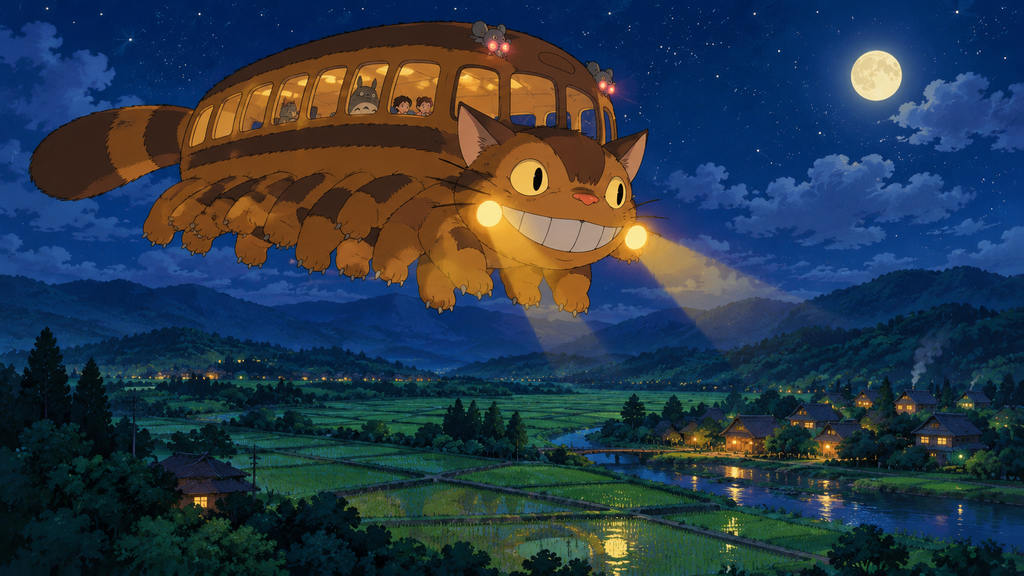
Rather than disrupting their lives, Totoro and his whimsical companions—including the twelve-legged Catbus—become gentle guardians for the girls. When a sudden misunderstanding surrounding their mother’s hospital stay causes Mei to wander off and get lost in the countryside, Satsuki turns to Totoro and the magical forces of the forest to bring her sister safely home.
Animation and Visuals
Studio Ghibli’s hand-drawn execution in My Neighbor Totoro represents a gold standard of classic 2D cel animation:
- Lush Natural Environments: Hand-painted watercolor backgrounds portray countryside rice paddies, sunlit creeks, rustling summer leaves, and towering ancient trees with breathtaking detail.
- Masterful Character Acting: Every gesture—Mei waddling through high grass, Satsuki carefully pouring tea, or Totoro’s ears twitching at the sound of raindrops hitting an umbrella—feels authentic and full of life.
- Whimsical Creature Design: Totoro’s giant plush silhouette, gaping smile, and soft breathing contrast delightfully with the glowing headlights and velvet fur of the Catbus.
Voice Cast and Characters
- Satsuki Kusakabe (Dakota Fanning in the 2005 Disney dub / Noriko Hidaka in original Japanese): Captures the eldest sister’s fierce devotion, occasional worry, and protective warmth.
- Mei Kusakabe (Elle Fanning in the 2005 Disney dub / Chika Sakamoto in original Japanese): Delivers a genuine, unfiltered portrayal of a curious four-year-old child.
- Tatsuo Kusakabe (Tim Daly): Portrays a patient, loving father who validates his daughters’ magical discoveries with joyful curiosity.
- Totoro & Catbus (Frank Welker / Hitoshi Takagi): Deep rumbles, cheerful roars, and purring sounds give the mythical forest spirit an unforgettable presence without needing actual spoken words.
Direction and Writing
Hayao Miyazaki achieves pure cinematic magic by slowing down the narrative pace. The screenplay avoids forced villainy, fast-paced action chases, or loud gags, choosing instead to celebrate quiet moments of childhood observation. Miyazaki’s writing trusts the audience, creating a comforting atmosphere where nature and human kindness serve as the primary forces driving the story.
Music and Sound
- Joe Hisaishi’s Score: Hisaishi created one of the most recognizable soundtracks in film history, blending airy synth melodies, whimsical woodwinds, and sweeping orchestral themes.
- Ambient Soundscapes: Rich natural audio—gentle rain falling on leaves, summer cicadas buzzing in the heat, and wind rushing through grass—immerses viewers directly in rural Japan.
Themes and Messages
- The Wonders of Nature: Encourages respect and reverence for the natural world and the ancient spirits protecting it.
- Sibling Solidarity: Showcases the deep, unconditional love and bond between older and younger sisters during family transitions.
- Childhood Resilience & Hope: Demonstrates how imagination, family support, and joy help children process real-world anxiety.
What Works Best
- Unrivaled Hand-Drawn Artistry: Background paintings and cel animation that remain visually unmatched nearly four decades later.
- Authentic Portrayal of Childhood: Captures exact childhood mannerisms, wonder, and emotion better than almost any other animated film.
- Iconic Creature Concepts: Totoro and the Catbus stand as permanent pop-culture icons recognized globally.
- Masterpiece Soundtrack: Joe Hisaishi’s score infuses every scene with emotion and nostalgic warmth.
- Universal Family Appeal: Delivers an equally comforting experience for toddlers, teenagers, parents, and grandparents.
What Could Improve
- Minimal Conflict Narrative: Viewers who prefer high-stakes plotlines, clear villains, or fast-paced action might find the relaxed pace gentle.
- Short Runtime: At 86 minutes, the whimsical journey ends so pleasantly that audiences always wish for more time in the forest.
Family Viewing Guide
- Recommended Age: All ages (G / TV-Y7). Ideal for toddlers, young children, parents, and fans of hand-drawn animation.
- Violence and Action: Zero violence, fighting, or malice.
- Scary or Intense Scenes: Completely gentle throughout. A short sequence where Mei briefly gets lost causes temporary emotional concern, but it resolves quickly with kindness and help from Totoro.
- Language: Rated G. 100% clean and wholesome dialogue.
- Positive Messages: Promotes family love, helping neighbors, respecting nature, and finding comfort in curiosity.
Final Verdict
ToonTycoon Verdict: Essential Masterpiece
My Neighbor Totoro is an immortal crown jewel of global animation. With Hayao Miyazaki’s patient, loving direction, Studio Ghibli’s hand-painted visuals, and Joe Hisaishi’s unforgettable music, this peaceful story remains an essential masterpiece that heals the spirit and sparks joy for every generation.
ToonTycoon Rating Table
| Category | Rating |
| Animation & Visuals | 10/10 |
| Story & Writing | 9.8/10 |
| Characters | 10/10 |
| Voice & Cast Performance | 9.8/10 |
| Music & Score | 10/10 |
| Family Entertainment | 10/10 |
| Overall ToonTycoon Rating | 9.9/10 |
ToonTycoon Verdict: Essential Masterpiece
Frequently Asked Questions
Is My Neighbor Totoro suitable for toddlers and young kids?
Yes! It is one of the most gentle, heartwarming movies ever made, with zero villains, scary violence, or inappropriate language, making it perfect for ages 2 and up.
Who directed My Neighbor Totoro?
The film was written and directed by legendary Japanese animation director Hayao Miyazaki for Studio Ghibli.
What studio animated My Neighbor Totoro?
The movie was produced by the world-renowned Japanese animation house Studio Ghibli and released in 1988 alongside Grave of the Fireflies.
What does Totoro represent?
Totoro is a benevolent forest guardian spirit (kami) who protects the ancient woods and provides comfort, joy, and magical guidance to young children.