
Navigating the world of animated films and children’s media can feel like a daunting minefield for modern caregivers. Animation is no longer restricted to lighthearted morning cartoons—it spans everything from gentle preschool adventures to intense, emotionally complex multiversal stories and dark fantasy epics. If you are looking for an authoritative Parents Content Guide to Animated Movies, this certified breakdown provides the clarity you need.
Standard MPAA classifications often fail to provide parents with a complete picture. A PG rating might signal harmless cartoon slapstick in one feature, or severe panic attacks, existential grief, and terrifying character designs in another.
Welcome to our certified Parents Content Guide to Animated Movies, an evidence-based roadmap built to help families evaluate age suitability, spot sensitive emotional triggers, and curate high-quality entertainment for every stage of childhood.
Table of Contents
- Parents Content Guide to Animated Movies: Age Ratings
- Identifying Sensitive Content Triggers
- Certified Safety Reviews: Popular Animated Films
- Age-Appropriate Curation Framework
- Quick Facts and Summary
- Frequently Asked Questions
Parents Content Guide to Animated Movies: Age Ratings
Understanding how official ratings connect to child development represents the foundation of healthy screen time. Every comprehensive Parents Content Guide to Animated Movies must map official ratings to real-world developmental milestones.
| Age Group | Target Rating | Key Developmental Considerations |
| Toddlers (Ages 2–4) | TV-Y / G | Zero jump scares, bright colors, slow pacing, socio-emotional learning. |
| Early Elementary (Ages 5–7) | G / PG (Mild) | Slapstick action, clear moral boundaries, simple problem-solving. |
| Tweens (Ages 8–12) | PG / TV-PG | Emotional depth, peril, thematic weight, handling peer relationships. |
| Teens (13+) | PG-13 / TV-14 | Mature allegories, intense action violence, complex moral dilemmas. |
Toddlers & Preschoolers (Ages 2–4)
Children in this foundational bracket interpret visual media literally. High-frame-rate movement, dark visual palettes, and sudden audio spikes can trigger sensory fatigue or nighttime anxiety. Caregivers following our Parents Content Guide to Animated Movies should prioritize gentle pacing and clear social resolutions, as seen in expert child development insights from the Common Sense Media Age Guidelines.
Early Elementary (Ages 5–7)
Kids in early elementary school understand the difference between fantasy and real life, yet remain vulnerable to themes of parental separation, animal peril, and grotesque physical transformations. Light slapstick is generally fine, provided the tone remains cheerful and reassuring.
Tweens (Ages 8–12)
Tweens can digest multi-layered narrative arcs, nuanced emotional conflicts (such as social anxiety, identity struggles, or loss), and fast-paced superhero action. As emphasized in this Parents Content Guide to Animated Movies, parents should stay mindful of existential dread and covert adult humor.
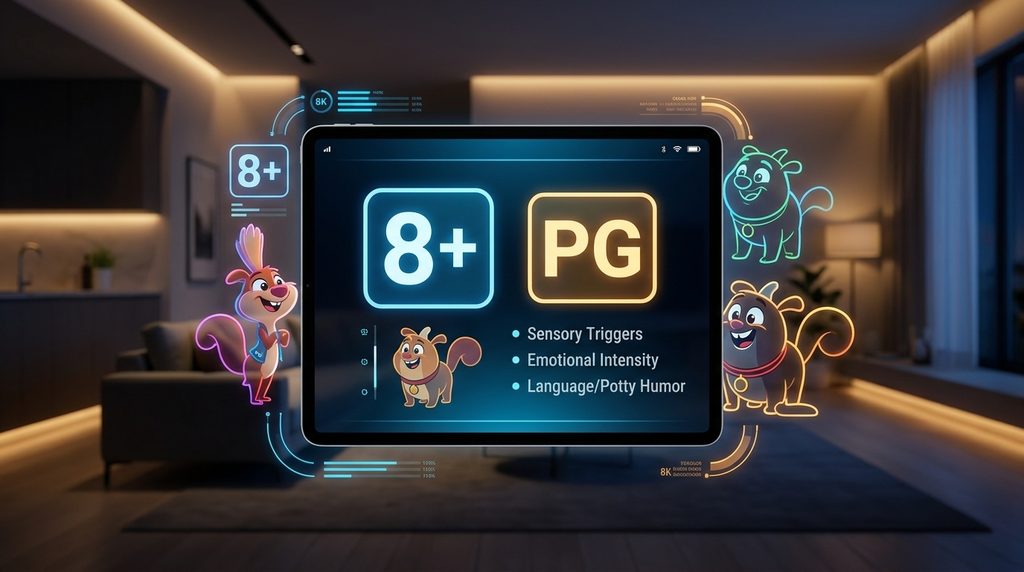
Identifying Sensitive Content Triggers
In our comprehensive Parents Content Guide to Animated Movies, evaluating a film requires looking past simple age labels to inspect four distinct content areas:
1. Sensory Overload & Scary Visuals
Modern animated releases frequently rely on rapid camera movements, flashing strobes, and booming soundscapes. Grotesque creature transformations or shadowy, claustrophobic settings can trigger stress in sensitive viewers. For official rating definitions, check the Motion Picture Association Film Ratings.
2. Emotional Peril & Relational Stress
Depictions of parental loss, abandonment, or mental health struggles can prove significantly more overwhelming to young minds than physical slapstick. Our Parents Content Guide to Animated Movies notes that films tackling real-world emotional battles require active parent conversation.
3. Language & Social Mimicry
While harsh profanity is rarely featured in family animation, subtle name-calling (such as “jerk,” “loser,” or “moron”), crude potty humor, and defiant attitudes are easily adopted by younger children.
4. Slapstick vs. Realistic Aggression
It is essential to separate physical cartoon slapstick—where characters bounce back unharmed—from realistic physical aggression, hand-to-hand combat, or weapon usage that models dangerous behavior.
Certified Safety Reviews: Popular Animated Films
Here is an in-depth safety breakdown of major family releases derived from our Parents Content Guide to Animated Movies testing framework.
Inside Out 2
- Official Rating: PG (Mild thematic elements, animated action)
- Recommended Age: 8+ (Parental guidance advised for ages 6–7)
| Category | Content Evaluation Breakdown |
| Violence & Action | Mild slapstick; characters collide during chaotic emotional scenes with no physical injuries. |
| Emotional Intensity | High. Depicts an authentic anxiety attack involving severe hyperventilation and overwhelming negative thoughts. |
| Scary Imagery | A giant, shadowy hooded figure looms inside a dark vault, which may frighten children under 6. |
| Language & Humor | Mild name-calling (“jerks,” “morons,” “delusional”) and subtle puberty-related jokes. |
The Wild Robot
- Official Rating: PG (Action/Peril, thematic elements)
- Recommended Age: 8+ (Not recommended for children under 7)
| Category | Content Evaluation Breakdown |
| Violence & Action | Frequent predator-versus-prey animal battles, laser blasts, mechanical damage, and intense forest fire disasters. |
| Emotional Intensity | Very High. Centers on grief, the accidental loss of an animal mother, adoption, isolation, and self-sacrifice. |
| Scary Imagery | Threatening predator attacks (grizzly bears) and hostile corporate robots invading an island environment. |
| Language & Humor | Clean language overall; humor focuses on natural wildlife instincts and deadpan robot interactions. |
Dog Man
- Official Rating: PG (Action and rude humor)
- Recommended Age: 6+ (Parental guidance advised for ages 6–8)
| Category | Content Evaluation Breakdown |
| Violence & Action | Fast-paced comic slapstick; energetic explosions, giant robot battles, and vehicle collisions with zero harm. |
| Emotional Intensity | Low-to-Moderate. Touches on found-family warmth alongside mild subplots involving parental neglect. |
| Scary Imagery | Animated giant buildings with sharp teeth; delivered in a bright, silly comic style. |
| Language & Humor | Strong focus on potty humor and light insults (“dingdong,” “poo-poo head,” “butt-sniffer,” “suckers”). |
Age-Appropriate Curation Framework
Every complete Parents Content Guide to Animated Movies must equip caregivers with practical, actionable tools for family viewing sessions:
- Pre-Screening Audio & Visuals: If your child under 6 is sensitive to dark themes, avoid films driven by shadowy color palettes, sharp creature designs, or ominous orchestral scores.
- Co-Viewing Active Engagement: Watch intense scenes alongside your child. Use emotional moments (like Riley’s anxiety attack in Inside Out 2) as practical opportunities to discuss emotional well-being.
- Balancing Tension with Relief: Make sure heavy narrative conflict is balanced by cheerful humor, warm friendships, and positive moral lessons.
- Exploring Internal Resources: For more reviews, check our analysis of Spider-Man: Across the Spider-Verse Review to see how multiversal themes suit older tweens and teens.
Quick Facts and Summary
| Parameter | Certified Standard |
| Primary Goal | Delivering transparent, reliable safety breakdowns in every Parents Content Guide to Animated Movies |
| Core Target Ages | Toddlers (2–4), Early Elementary (5–7), Tweens (8–12), Teens (13+) |
| Key Safety Factors | Sensory overload, emotional intensity, language/potty humor, slapstick violence |
| Review Updates | Updated weekly alongside theatrical releases and streaming debuts |
Frequently Asked Questions
Q1: Why should parents consult a Parents Content Guide to Animated Movies for PG titles?
The MPAA “PG” (Parental Guidance) tag spans a wide spectrum. It applies to gentle slapstick comedies as well as movies exploring intense anxiety, severe grief, or scary creature encounters. Reading a dedicated Parents Content Guide to Animated Movies clarifies these nuances so you can select age-suitable entertainment with confidence.
Q2: How can I identify if an animated release might trigger sensory overload?
Examine the film’s visual palette, sound engineering, and editing rhythm. As outlined in this Parents Content Guide to Animated Movies, films featuring dark environments, sudden loud audio bursts, rapid camera edits, or intimidating monster transformations are far more prone to causing fatigue or fear in children under 6.
Q3: What does “co-viewing” mean, and why does it benefit tweens?
Co-viewing means parents watch media actively with their kids rather than using screen time passively. For tweens (ages 8–12), co-viewing enables caregivers to unpack complex topics like peer pressure, emotional regulation, and self-worth right as they unfold on screen.
Q4: Is slapstick-heavy comedy like Dog Man suitable for early elementary kids?
Yes, films like Dog Man suit children aged 6 and up because the action occurs in an exaggerated, brightly colored comic book world where characters remain uninjured. However, any thorough Parents Content Guide to Animated Movies advises caregivers to anticipate mild potty humor and silly insults that young kids might repeat.