
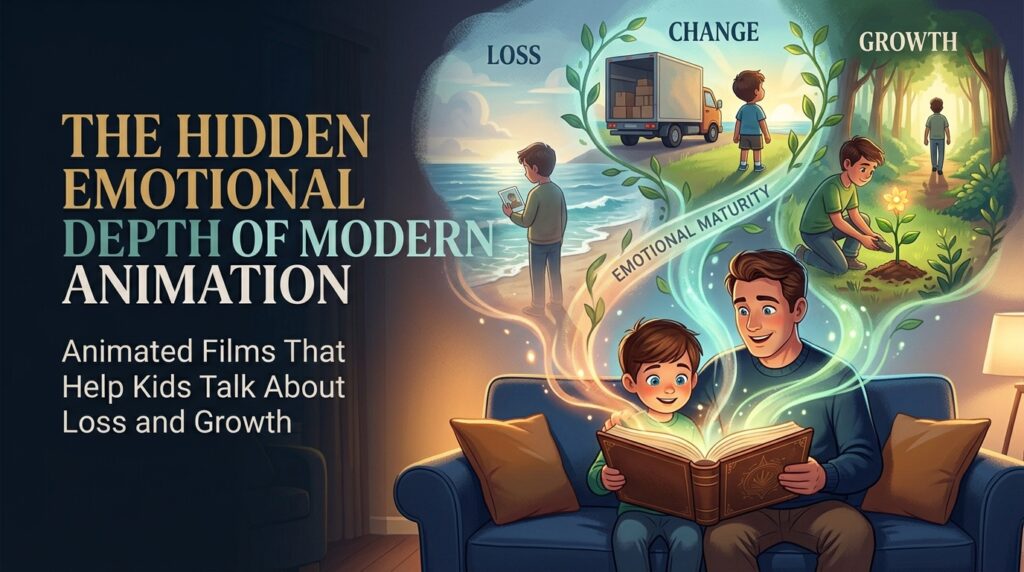
Animated films that help kids talk about loss and growth have quietly transformed from simple weekend entertainment into one of the most effective, compassionate toolkits for modern parenting. As parents, we often lean on animation for a quick hour or two of light screen time—a reliable way to keep little ones occupied while dinner is on the stove or chores get done. But if you pay close attention to the contemporary landscape of cinema, you’ll notice a profound shift. Animation is no longer just bright colors, talking animals, and physical comedy.
When families intentionally select animated films that help kids talk about loss and growth, movie night shifts from passive consumption into active emotional coaching. Children experience big, complex emotions—grief, homesickness, anxiety, and the painful sting of social rejection—long before they have the developmental vocabulary to articulate them.
When a child sees an animated protagonist struggle with moving to an unfamiliar city, losing a beloved family member, or watching a close friendship evolve, something remarkable happens. The screen provides a safe, empathetic distance. By surrounding children with animated films that help kids talk about loss and growth, we allow them to process heavy feelings through someone else’s story before applying those lessons to their own lives.
Table of Contents
- The Psychology of Co-Viewing: Why Narrative Distance Matters
- Key Emotional Themes in Modern Animation
- Curated Movies for Big Life Lessons
- Parenting Conversation Starters by Topic
- Frequently Asked Questions (FAQs)
- Summary and Key Takeaways
1. The Psychology of Co-Viewing: Why Narrative Distance Matters
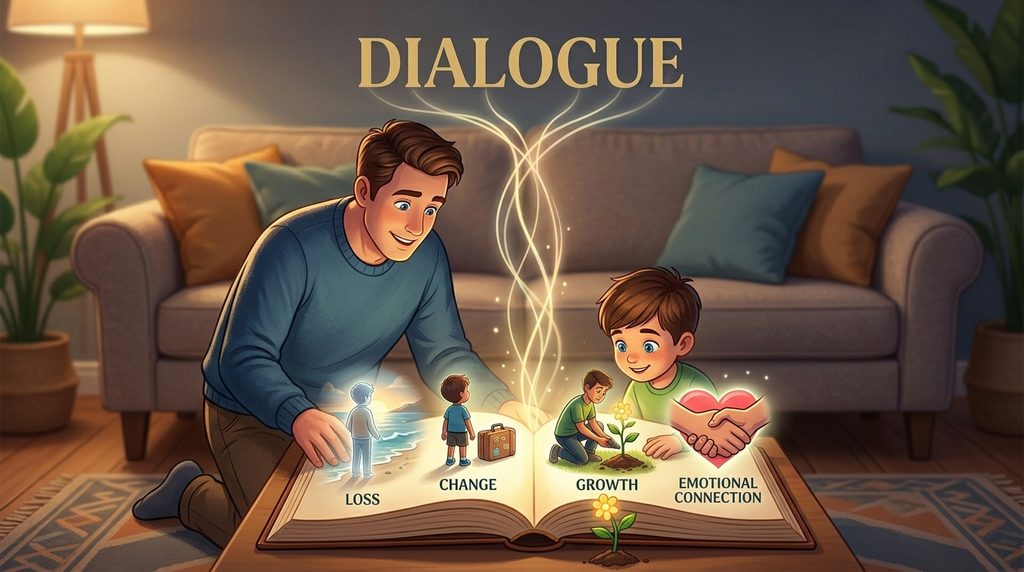
In child psychology, “co-viewing” refers to the practice of parents watching media alongside their children and actively engaging with the content. When we sit together on the sofa, movie night transforms from passive screen time into an opportunity for emotional growth.
Young children often freeze or shut down when put on the spot with direct questions like, “Why are you upset about changing schools?” or “Are you feeling lonely?” Direct confrontation feels overwhelming.
Animation provides narrative distance. By discussing a character’s choices and reactions, you remove the personal pressure. A child who hesitates to share their own anxiety will happily explain why Riley from Inside Out felt overwhelmed moving across the country, opening a natural doorway for parents to gently bridge the conversation back to real life.
2. Key Emotional Themes in Modern Animation
Modern animated features regularly explore themes that were once reserved exclusively for adult dramas. By structuring complex psychological concepts into accessible visual stories, these films help children build emotional resilience across four core areas:
| Emotional Theme | Core Psychological Challenge | How Animated Films Help |
| Relocation & Change | Anxiety over leaving behind comfort, friends, and routine | Normalizes sadness while showing that new environments bring hidden growth |
| Grief & Memory | Processing loss, death, or permanent life transitions | Teaches that honoring memories keeps love alive and that sadness isn’t a failure |
| Evolving Friendships | Navigating social rejection, growing apart, or setting boundaries | Demonstrates that true connection requires authenticity, forgiveness, and flexibility |
| Emotional Maturity | Accepting that uncomfortable feelings (fear, anger, sadness) are natural | Shows that emotional balance requires honoring all feelings, not just staying happy |
3. Curated Movies for Big Life Lessons
Here is a carefully selected guide to standout animated films, organized by the specific emotional challenges they address, along with what makes each title so valuable for family viewing.
Handling Relocation and Big Life Changes
- Top Pick: Inside Out / Inside Out 2
- Core Focus: Relocation stress, identity shifts, emotional balance, and adolescent anxiety.
- Why It Works: By personifying core emotions inside a young girl’s mind, these films offer kids a visual language for their internal struggles. Inside Out brilliantly proves that Sadness is essential to emotional healing, while its sequel validates the tricky transition into teenage anxiety and self-worth.
Processing Loss, Death, and Memory
- Top Pick: Coco
- Core Focus: Grief, ancestral heritage, honoring loved ones, and family expectations.
- Why It Works: Set against the vibrant backdrop of Día de los Muertos, Coco presents death not as a terrifying finality, but as a tender continuation of family history. It offers children a comforting framework for processing grief, showing that keeping memories alive honors those we’ve lost.
Navigating Evolving Friendships and Social Belonging
- Top Pick: Luca
- Core Focus: Fear of rejection, peer pressure, stepping out of comfort zones, and acceptance.
- Why It Works: Set along the Italian Riviera, Luca uses the allegory of sea monsters blending into a human village to explore what it feels like to hide your true self to fit in. It highlights the value of friends who encourage your personal growth rather than holding you back.
Managing Loss, Responsibility, and Healing
- Top Pick: Big Hero 6
- Core Focus: Sudden loss, bereavement, constructive vs. destructive coping mechanisms.
- Why It Works: Following Hiro’s journey after losing his older brother, the film features Baymax—a literal healthcare companion—who continually checks Hiro’s emotional “pain scale.” It validates anger and grief while guiding kids toward constructive ways to heal.
4. Parenting Conversation Starters by Topic
To help turn movie credits into meaningful connection, use these warm, open-ended discussion prompts tailored to each life lesson:
Prompts for Moving & Changes in Life
- “Riley felt a mix of Joy and Sadness when her family moved. Have you ever felt two different emotions at the exact same time?”
- “What is one thing about our current routine or house that you would want to keep the same even if we moved?”
Prompts for Grief & Remembering Loved Ones
- “In Coco, music helped Miguel stay connected to his family. What is a happy memory or tradition that reminds you of someone we miss?”
- “When Hiro was sad in Big Hero 6, Baymax reminded him that it was okay to cry. What helps you feel comforted when you’re going through a tough day?”
Prompts for Friendship & Belonging
- “Luca and Alberto had to learn how to support each other’s dreams. What do you think makes a really good friend?”
- “Have you ever felt like you had to hide a part of yourself or pretend to like something just to fit in with a group?”
5. Frequently Asked Questions (FAQs)
How can animated films help kids talk about loss and growth?
Understanding animated films that help kids talk about loss and growth comes down to narrative safety. Movies allow children to observe intense emotional scenarios from a safe distance, giving them a visual language to recognize, process, and discuss their own real-world feelings without feeling exposed.
When should parents introduce movies with sad or heavy themes?
Children as young as 4 or 5 can handle gentle emotional themes when paired with active co-viewing. Selecting animated films that help kids talk about loss and growth allows parents to pause, explain difficult moments, and offer comfort if a scene feels overwhelming.
How do I start a post-movie conversation without sounding like I’m lecturing?
Keep it casual and open-ended. Instead of asking direct personal questions right away, ask about the character’s choices first. Leveraging animated films that help kids talk about loss and growth works best when you focus on empathy for the protagonist before connecting it to your child’s personal experiences.
6. Summary and Key Takeaways
Using animated films that help kids talk about loss and growth is one of the most effective, accessible ways to foster emotional intelligence at home. By selecting thoughtful movies, watching them together, and opening up reflective dialogue with simple conversation prompts, you give your child the tools to navigate life’s natural ups and downs with resilience and confidence.