
We have all been there. You set up movie night, pop a fresh bowl of popcorn, settle into the sofa with the kids, and hit play on a colorful cartoon that looks completely harmless. Twenty minutes later, a terrifying shadow creature lunges across the screen, or a character launches into a surprisingly mature existential crisis. Suddenly, your seven-year-old is clinging to your forearm, and you are left wondering how a brightly colored cartoon ended up giving your child nightmares.
Understanding animated movie age ratings has become far trickier than it was back in the 1990s. Today, animated storytelling isn’t just for toddlers; it encompasses everything from soft pre-school adventures to complex superhero sagas and dark fantasy epics. Knowing how classification boards evaluate these films—and why so many modern releases land in the PG or PG-13 zone—is essential for keeping family viewing pleasant and age-appropriate.
Table of Contents
- How Rating Boards Evaluate Animated Features
- Understanding Animation Rating Tiers
- Why Modern Animated Films Receive PG and PG-13 Ratings
- How Parents Can Evaluate Content Before Screening
- Quick Facts and Summary Table
- Frequently Asked Questions
How Rating Boards Evaluate Animated Features
When film boards analyze animated releases, they look closely at themes, intensity, action, and language. However, evaluating animated features involves unique nuances that live-action films rarely trigger.
The MPAA System (United States)
The Motion Picture Association (MPAA) assigns age certificates based on a panel of parents who screen each film. When assessing animated movie age ratings, the MPAA considers whether visual stylized elements soften real-world violence or intensify psychological peril. A drawn sword or energy blast in an animated fantasy might get more leeway than a real blade, but prolonged emotional dread or jump scares can quickly push a film from G to PG.
The BBFC System (United Kingdom)
The British Board of Film Classification (BBFC) places heavy emphasis on psychological impact, threat levels, and tone. For example, a film might receive a ‘U’ (Universal) rating if the danger is brief and clearly resolved, but it steps up to ‘PG’ if scary scenes feel inescapable for younger viewers. UK guidance explicitly notes why a rating was awarded—such as “scary sequences” or “mild bad language”—which provides helpful nuance for global audiences reading reviews online.
International Considerations (Asia & Beyond)
International boards often apply distinct cultural benchmarks. In markets across Asia, including South Asia, local censors look closely at respectful dialogue, emotional intensity, and family values alongside traditional checks for violence or scare factors. What might be considered mild slapstick in the West could draw a stricter classification if it crosses into disrespectful behavior or dark themes.
Understanding Animation Rating Tiers
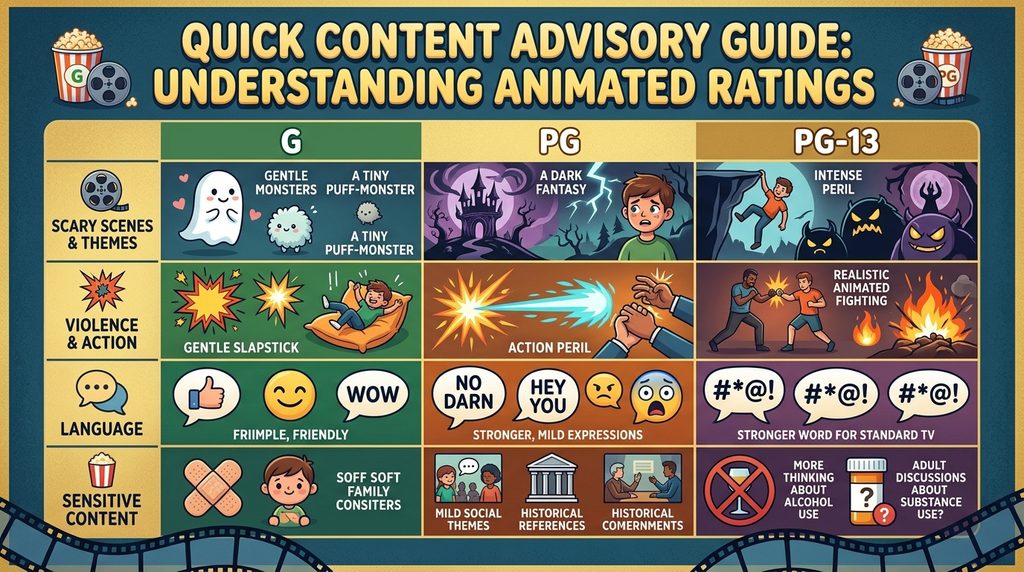
To make sense of animated movie age ratings, it helps to look at the official categories side by side with real-world examples.
| Rating Tier | Classification Criteria | Key Content Triggers | Representative Animated Examples |
| G / U | General Audiences / Universal. Suitable for all ages. Nothing in tone or language that would offend top-tier young viewers. | Soft slapstick, gentle conflict, bright colors, clear moral resolutions, zero bad language. | The Many Adventures of Winnie the Pooh, Finding Nemo, My Neighbor Totoro, Cars |
| PG / PG | Parental Guidance Suggested. Some material may not be suitable for children under 8 to 10 years old. | Mild action peril, thematic darkness, jump scares, mild bathroom humor, emotional grief. | Spider-Man: Into the Spider-Verse, Coraline, Inside Out 2, The Nightmare Before Christmas |
| PG-13 / 12A | Parents Strongly Cautioned. Some material may be inappropriate for pre-teens under 13. | Intense animated violence, dark fantasy themes, mild profanity, complex psychological horror. | Incredibles 2 (for flashing effects/intensity), Nausicaä of the Valley of the Wind, Princess Mononoke |
Decoding these animated movie age ratings allows parents to match the story’s emotional weight to their child’s specific maturity level rather than relying on bright visual art alone.
Why Modern Animated Films Receive PG and PG-13 Ratings
If you have noticed that almost every major animated film in cinemas today carries a PG tag, you are not imagining things. Pure ‘G’ rated theatrical animated features have become increasingly rare. Here is why modern studio projects frequently lean into higher classification tiers:
1. Complex Psychological Themes
Modern animation studios like Pixar, DreamWorks, and Sony Animation regularly tackles grief, identity crises, anxiety, and intergenerational trauma. While these rich themes make for incredible storytelling, they can overwhelm younger children who lack the emotional context to process them without guidance.
2. High-Octane Action and Peril
Animation technology has evolved dramatically. Today’s camera sweeps, lighting effects, and sound design create sensory experiences as intense as any live-action blockbuster. High-stakes superhero battles and kinetic chase scenes naturally bump animated movie age ratings up to PG or PG-13.
3. Broadening the Audience Base
Studios want teenagers and adults in theater seats alongside young families. By introducing sharper humor, complex villain motivations, and sophisticated narrative stakes, filmmakers appeal to a broader demographic—though this naturally shifts the final rating certificate upwards.
How Parents Can Evaluate Content Before Screening
Relying solely on a letter code isn’t always enough when deciding what your child is ready to watch. Here is a practical content advisory guide for carrying out a thorough family movie safety check before pressing play:
- Read Detailed Content Breakdowns: Use resources like Common Sense Media or the BBFC’s detailed insight notes to check for specific triggers like animal distress, loud sound shocks, or family loss.
- Watch the Full Trailer First: Trailers usually highlight the film’s highest-energy moments, darkest visuals, and punchiest humor, offering a quick sense of the overall intensity.
- Factor in Individual Sensitivity: Age is just a general number. A sensitive nine-year-old might struggle with fantasy peril that a fearless six-year-old sleeps right through.
- Practice Co-Viewing: When screening a new PG-rated animated title, watch it together so you can discuss complex themes, offer comfort during scary scenes, or pause the film if needed.
Quick Facts and Summary Table
Here is a quick snapshot of how animated movie age ratings function across major international rating authorities:
| Rating Authority | Primary Focus Areas | Key Guidance Metric | How To Check |
| MPAA (US) | Theme, violence, language, drug references | Letter badges (G, PG, PG-13, R) | MotionPictures.org & Film Ratings Database |
| BBFC (UK) | Threat level, psychological impact, language | Color-coded symbols (U, PG, 12A, 15) | BBFC Content Insight App & Website |
| CBFC (South Asia / International) | Family suitability, cultural sensitivities, theme intensity | Category certificates (U, UA 7+, UA 13+, A) | Official Regional Board Press Releases |
Following this parental guidance animated films roadmap ensures you won’t be caught off guard by unexpected scares or adult-oriented storytelling during family leisure time.
Frequently Asked Questions
What do animated movie age ratings mean for young kids?
Animated movie age ratings serve as a standardized guide to help parents determine whether a film’s visual intensity, themes, language, and action levels are appropriate for their child’s emotional development stage. While a ‘G’ rating signifies universal appropriateness, ‘PG’ indicates that some scenes may require parental context or contain mild scares.
Why do so many family cartoons get a PG rating today?
Modern cartoons receive PG ratings because they feature more dynamic action sequences, immersive sound design, sensory intensity, and mature emotional themes than older animated films. Rating boards assign PG to alert parents that young or sensitive viewers might find specific scenes scary or emotionally heavy.
How can I double-check parental guidance animated films before my children watch them?
To conduct an effective family movie safety check, read localized content advisories from official boards like the BBFC or MPAA, check parent review platforms for detailed breakdowns on violence and scares, watch the official theatrical trailer, and consider previewing the film yourself if your child is particularly sensitive to dark imagery or loud noises.