
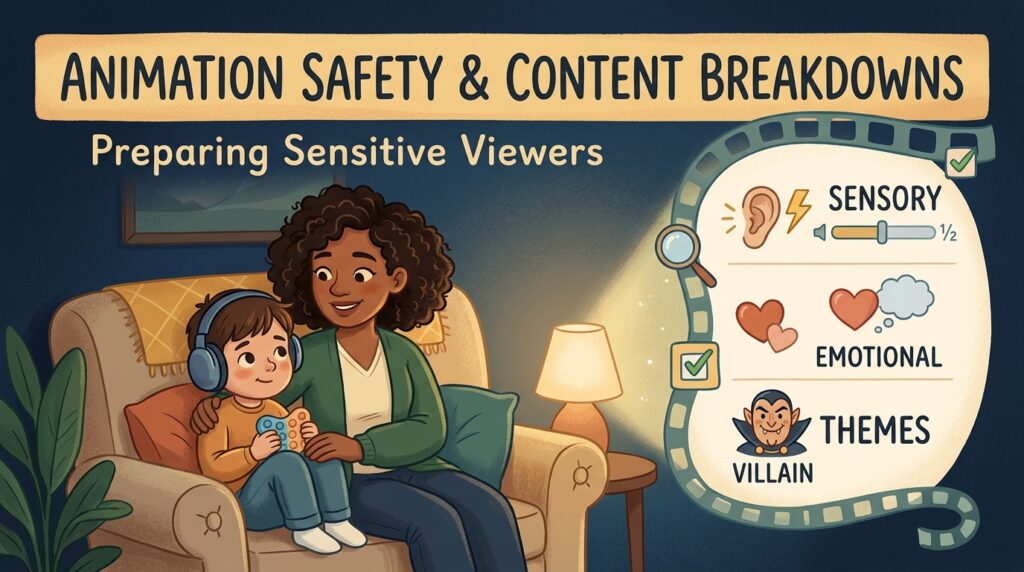
If you have ever had to quietly step out of a movie theater with a weeping seven-year-old because a villain’s sudden roar shook the surround-sound speakers, you know the feeling. On paper, it was just a PG-rated family feature with colorful characters. In reality, the flashing lasers, thunderous bass, and sudden emotional abandonment arc turned a fun weekend outing into a sensory overload nightmare.
Navigating animation safety and content breakdowns is one of the most practical habits parents can build today. Modern animated films are artistic marvels, but their dynamic lighting, high-octane soundscapes, and mature themes can easily overwhelm sensitive or neurodivergent kids. Understanding how to break down content before hitting play ensures family movie night stays comforting rather than overwhelming.
Table of Contents
- Identifying Sensory Intensity and Emotional Triggers
- Managing Jump Scares and Intense Peril in Modern Animation
- Practical Tips for Preparing Sensitive Children
- Quick Facts and Summary Table
- Frequently Asked Questions
Identifying Sensory Intensity and Emotional Triggers
Understanding animation safety and content breakdowns begins with knowing what specific elements cause distress. While adults focus on plot points, kids process films through immediate visual and auditory inputs.
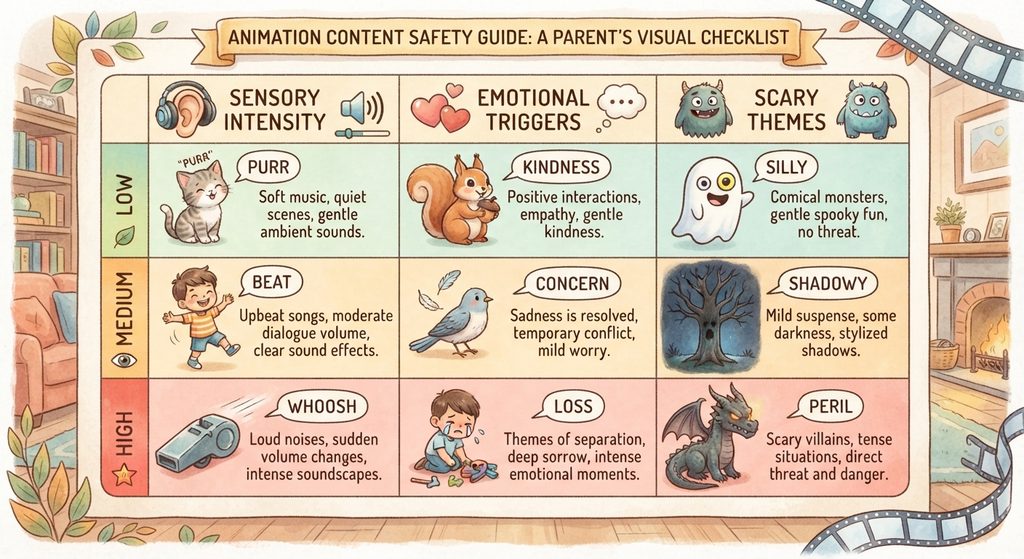
Sensory vs. Emotional Triggers in Animation
| Trigger Category | Common Film Examples | How It Affects Sensitive Viewers | Recommended Parent Action |
| Sensory Intensity in Cartoons | Flashing lightning, sudden explosions, bass-heavy roars, chaotic camera spins. | Triggers sensory overload, ear-covering, physical restlessness, or panic. | Lower speaker volume, keep soft ambient lighting on, or use noise-canceling headphones. |
| Handling Scary Themes in Animation | Monstrous transformations, dark shadows, unexpected jump scares, eerie sound effects. | Causes immediate fear, bad dreams, or reluctance to finish the movie. | Preview trailers, discuss monster designs beforehand, and keep a pillow handy to squeeze. |
| Emotional Triggers in Kids Movies | Separation from parents, death of a pet, bullying, loss of a home. | Triggers deep sadness, anxiety about real-life safety, or crying spells. | Give story heads-up (“They get separated, but they reunite soon!”), and validate their feelings. |
Evaluating these factors as part of your routine animation safety and content breakdowns helps tailor viewing choices to your child’s temperament.
Managing Jump Scares and Intense Peril in Modern Animation
Why do modern cartoons feel so intense compared to older classics? Advanced digital animation allows directors to craft ultra-realistic lighting, rapid-fire cuts, and immersive surround audio.
Loud Audio and Visual Shock
A simple villain entry isn’t just a quiet entrance anymore—it’s accompanied by flashing strobes and sub-woofers shaking the floor. When reviewing animation safety and content breakdowns, parents should take note of sudden volume spikes, which are often the primary cause of movie theater anxiety.
Complex Narrative Danger
Modern stories love high stakes. Instead of simple slapstick chase scenes, main characters frequently face existential threats, dimensional voids, or deep personal betrayals. While older children thrive on this drama, sensitive viewers need clear child-friendly content warnings to understand that everything will turn out alright.
Practical Tips for Preparing Sensitive Children
You don’t need to ban movie nights altogether to keep things safe. Instead, apply these simple strategies for animation safety and content breakdowns before starting any new release:
- Offer Spoilers as Comfort Anchors: For anxious children, knowing the ending reduces fear. Gently say: “The hero gets lost in the dark cave, but his friends find him in five minutes!”
- Create a Low-Sensory Home Viewing Zone: Keep room lamps on dim rather than total darkness, adjust the sound settings to ‘Night Mode’ or ‘Reduce Loud Sounds’, and keep comfort blankets close by.
- Normalize Taking Breaks: Let your child know they can pause the film, close their eyes, or step into the kitchen whenever a scene feels too big.
- Pre-Screen or Check Detail Guides: Look at detailed breakdown sites or community forums to flag specific jump scares or emotional loss scenes ahead of time.
Quick Facts and Summary Table
A quick guide to integrating animation safety and content breakdowns into your family’s weekly viewing routine:
| Preparation Step | Focus Area | Goal for the Viewer |
| 1. Audio-Visual Check | Flashing lights, loud explosions, screen shake | Prevents sensory overload and auditory shock |
| 2. Emotional Pre-Talk | Character loss, separation, scary villains | Prepares child for sad or intense storyline beats |
| 3. Environment Control | Soft room lighting, volume limiters, fidget toys | Keeps physical body grounded and calm during high-energy scenes |
| 4. In-the-Moment Support | Pause button, gentle reassurance, open exits | Gives child control over their viewing experience |
Making animation safety and content breakdowns a normal part of your family prep builds confidence and keeps entertainment fun for everyone.
Frequently Asked Questions
Why are animation safety and content breakdowns so important for sensitive kids?
Animation safety and content breakdowns give parents a clear look at sensory and emotional intensity before playing a movie. Sensitive or neurodivergent children process sound, visual flashes, and emotional conflict intensely; checking breakdowns beforehand prevents scary surprises and sensory overload.
How can I spot sensory intensity in cartoons before watching?
You can spot sensory intensity by checking detailed content advisory breakdowns on family media sites, watching official movie trailers for quick audio-visual cuts, and checking parent forums that specifically highlight loud jump scares, strobe effects, or dark sequences.
What should I do if my child gets scared during an animated movie?
If a scene causes distress, pause the film immediately or step away. Offer calm physical reassurance, lower the sound volume, turn on soft room lights, and explain the scene in simple terms. Remind them that they are safe and that the story will have a comforting resolution.