
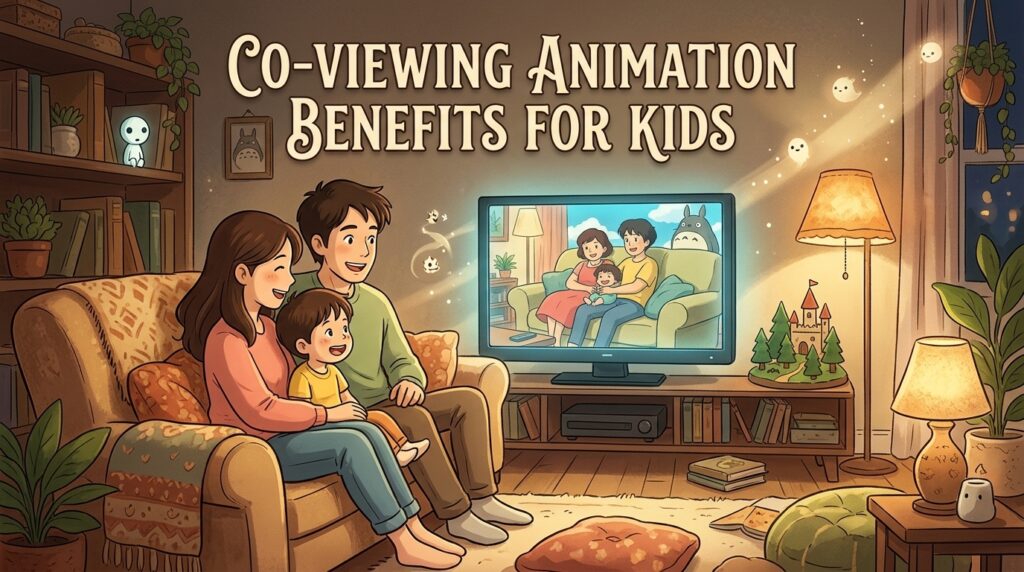
For decades, media consumption for children was viewed through a binary lens: screen time was either “good” or “bad.” As early childhood educators (ECE) and child development researchers continue to examine how digital media interacts with developing brains, the consensus has shifted dramatically. When parents move away from using screens as passive digital babysitters, the true co-viewing animation benefits for kids become remarkably clear.
The primary indicator of whether media helps or hinders a child’s growth isn’t just how long the screen is on—it is how the media is consumed and who is sitting beside them.
At ToonTycoon, our mission extends beyond reviewing animated plotlines; we examine animation as an accessible blueprint for early social-emotional learning (SEL). When parents transition from passive supervision to intentional joint engagement, the co-viewing animation benefits for kids unlock powerful pathways for building emotional literacy, speech development, and family bonding.
1. The Science of Active Viewing: What Happens in the Developing Brain
In early childhood (ages 2 to 7), the prefrontal cortex—the region of the brain responsible for impulse control, empathy, and emotional regulation—is undergoing rapid neural wiring. According to research published by the American Academy of Pediatrics, young children process complex emotional states through visual models long before they possess the internal vocabulary to express those feelings verbally.
When a child watches an animated story alone, intense visual scenes or character conflicts can sometimes trigger mild stress responses or confusion. Because their cognitive framework is still maturing, they struggle to parse narrative cause and effect on their own.
However, when a parent sits side-by-side with them, a vital psychological phenomenon known as co-regulation occurs:
- Scaffolding Understanding: Parents act as a cognitive bridge, helping children contextualize why a character feels sad, angry, or overwhelmed.
- Mirroring & Empathy: Watching characters navigate complex social scenarios (like sharing, overcoming loss, or handling rejection) stimulates mirror neurons. Parental feedback reinforces these lessons into real-world behavioral scripts.
- Reducing Cognitive Load: High-stimulation visuals can overwhelm a toddler’s working memory. A calm, present parent anchors the experience, allowing the child to absorb the underlying story themes rather than getting lost in sensory noise.
2. A Better Way to Watch: Passive Viewing vs. Active Co-Viewing
Most discussions about kids and screen time focus purely on hours spent in front of the TV screen. But early childhood development research shows that how your family watches matters far more than just the timer on your device.
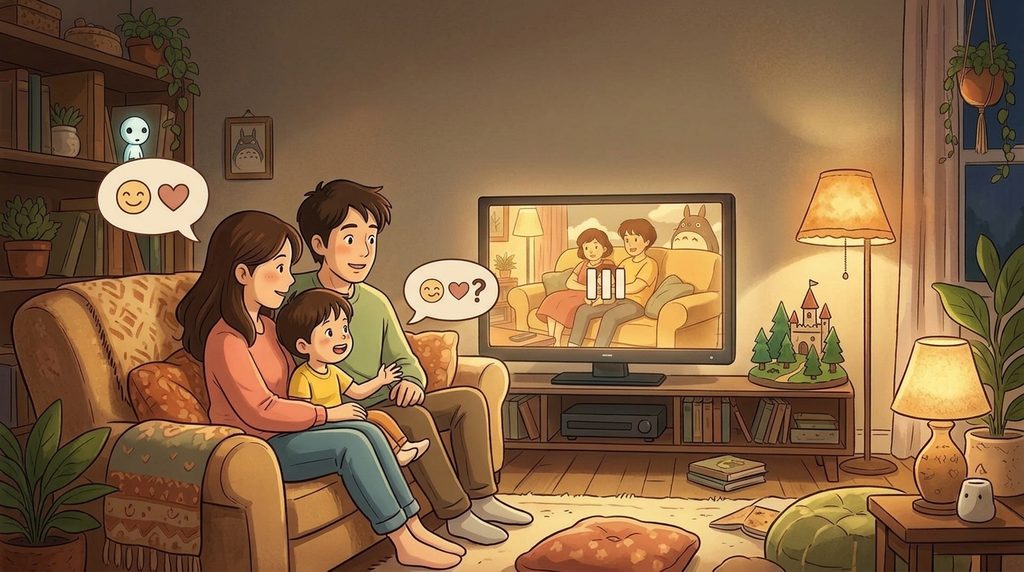
- Language & Vocabulary Acquisition: When kids watch alone, they absorb dialogue passively, which rarely translates into their daily speech patterns. When you watch together and chat about what is happening on screen, you naturally expand their vocabulary and conversational confidence in real-time.
- Emotional Literacy & Regulation: Heavy visual moments or character conflict can easily overwhelm a young child on their own. Sitting side-by-side lets you help them name big feelings—like anxiety, grief, or frustration—turning confusing scenes into moments of emotional growth.
- Focus & Attention Span: Rapid scene cuts and high-energy animation are designed to grab short attention spans. Guiding your child through the story arc keeps them engaged, building sustained focus rather than quick visual distraction.
- Family Connection: Instead of creating a passive “screen bubble” where everyone tunes out, joint viewing creates shared jokes, meaningful conversations, and lasting emotional touchpoints for your family.
3. Top Co-Viewing Animation Benefits for Kids Every Parent Should Know
Understanding the co-viewing animation benefits for kids allows parents to make intentional choices about their weekly movie routines. Here is how structured family viewing directly impacts child development:
A. Accelerated Speech and Narrative Comprehension
Children do not learn language effectively from synthetic screen audio alone. They learn language through human interaction. By asking simple questions during a scene, you transform passive listening into an interactive reading exercise.
B. Safe Exposure to Complex Emotions
Animated features regularly explore heavy themes—such as moving away from friends, losing a pet, or dealing with fear. Experiencing these heavy themes in a safe environment next to a trusted adult gives children a secure playground to process difficult emotions.
C. Critical Thinking and Media Literacy
Teaching children to evaluate what they consume is a lifelong skill. Discussing character motives teaches kids to analyze choices rather than simply absorbing visual entertainment without reflection.
4. The ECE Co-Viewing Playbook: 4 Steps for Parents
Turning a standard movie night into an enriching developmental experience does not require breaking the flow of entertainment or lecturing your child. Use these four practical strategies during your next family viewing session:
Step 1: Pause & Name (Building Emotional Vocabulary)
When a main character displays a clear visual emotion (e.g., slumped shoulders, wide eyes, clenched fists), pause briefly or whisper a soft observation:
“Look at Sadness sitting next to Joy—her shoulders are low. Have you ever felt your body feel heavy like that when you were disappointed?”
Providing a label for physical sensations helps children build a rich vocabulary for self-regulation.
Step 2: Connect to Real Life (Building Perspective-Taking)
Help your child bridge the gap between fantasy animation and their daily environment:
“Remember when the main character felt nervous on their first day at a new school? That felt a lot like your first morning in Pre-K, didn’t it?”
This strategy builds perspective-taking, allowing children to recognize that challenging feelings are universal and manageable. Be sure to check our Parents’ Guides for detailed breakdowns of character dynamics in popular releases.
Step 3: Encourage Curiosity Over Evaluation
Avoid closed questions like, “Was that movie funny?” Instead, ask open-ended prompts that encourage critical reasoning:
“Why do you think the character made that choice? What could they have tried instead?”
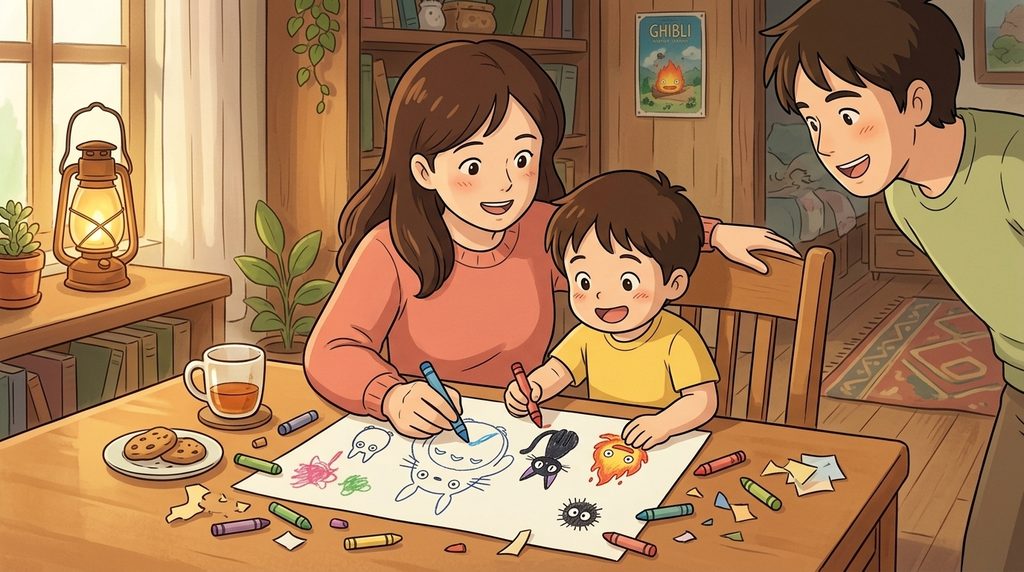
Step 4: Post-Movie Creative Play
After the credits roll, extend learning beyond the screen through drawing, block building, or role-play:
“Let’s build a house out of blocks for the characters. What kind of room would make them feel safe when they get scared?”
5. How We Evaluate Animated Media at ToonTycoon
At ToonTycoon, our editorial standards are designed by combining cinematic analysis with early childhood development principles. When reviewing new family releases, our editorial team looks past surface-level animation quality to evaluate:
- Sensory & Tone Indicators: Identifying sudden noise spikes, flashes, or intense visual shifts that might trigger sensory-sensitive children. Explore our full catalog under Studio Releases for age-appropriate breakdowns.
- Emotional Complexity Ratings: Scoring films based on how constructively they tackle themes like conflict resolution, grief, friendship dynamics, and self-acceptance.
- Parent Conversation Starters: Providing tailored questions for every review so parents can start meaningful discussions as soon as the movie ends.
Media isn’t just background noise, it can be a bridge to deeper connection. When curated thoughtfully, the co-viewing animation benefits for kids offer a powerful, lifelong framework for raising empathetic, articulate, and emotionally resilient children.
Frequently Asked Questions About Co-Viewing Animation
What are the main co-viewing animation benefits for kids compared to watching alone?
The primary co-viewing animation benefits for kids stem from social-emotional guidance and active engagement. When parents watch alongside their children, kids process emotional plotlines with lower cognitive stress, build broader speech vocabularies through real-time dialogue, and develop stronger perspective-taking skills compared to passive, isolated viewing.
At what age do co-viewing animation benefits for kids become most effective?
The most significant co-viewing animation benefits for kids occur during the early childhood years, specifically between ages 2 and 7. During this window of rapid brain development, young children actively rely on parental co-regulation to understand complex feelings like fear, empathy, jealousy, and grief shown in animated stories.
How often should parents practice intentional co-viewing with their children?
You do not need to sit through every single show your child watches to unlock these benefits. Setting aside 2 to 3 dedicated family movie sessions per week to practice intentional co-viewing is enough to establish strong emotional literacy routines and open channels for meaningful family conversations.
Can high-energy animated shows still deliver co-viewing animation benefits for kids?
Yes, even fast-paced or humorous animated features can offer strong learning opportunities. By pausing during pivotal character choices or talking about funny scenes afterward, parents can turn high-energy visual media into interactive lessons on cause, effect, and social behavior.