
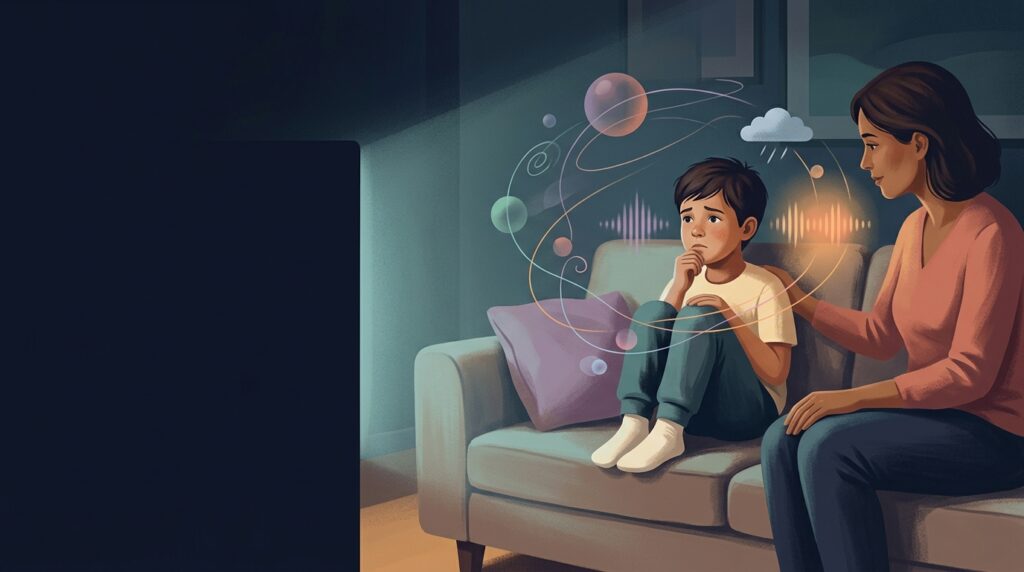
Inside Out 2 is colourful, funny and full of memorable characters. But beneath its cheerful animation lies a story about anxiety, social pressure, embarrassment and the fear of not being good enough. For some children, those themes may feel surprisingly personal.
Released in 2024, Pixar’s Inside Out 2 follows 13-year-old Riley as new emotions arrive in her mind, including Anxiety, Envy, Embarrassment and Ennui. As Riley tries to fit in at hockey camp and impress her peers, Anxiety increasingly takes control of her decisions.
The film carries a PG rating in the United States for thematic elements. Disney lists its runtime as approximately 96 minutes, while some film databases and guides list a slightly different runtime. Common Sense Media recommends it for viewers aged six and older, but also warns parents about suspense, peril and Riley’s apparent anxiety or panic attack.
So, is Inside Out 2 safe for anxious kids? For many children, it can be a thoughtful introduction to difficult emotions. For particularly sensitive viewers, younger children or those who become distressed by panic-like scenes, social rejection or intense sound, a little preparation can make a difference.
This ToonTycoon guide breaks down the film’s emotional intensity, frightening moments, sensory considerations and potentially upsetting themes before you press play.
Spoiler warning: The sections below discuss important emotional sequences and parts of the film’s climax.
Is Inside Out 2 Safe for Anxious Kids? Our Quick Verdict
Our verdict: Generally suitable for many school-age children, but consider your child’s individual sensitivities before watching.
Inside Out 2 does not rely on graphic violence or conventional horror. Its principal challenge is psychological and emotional intensity. Riley experiences mounting pressure to fit in, worries about how others perceive her and becomes increasingly overwhelmed as Anxiety attempts to prepare her for every possible outcome.
The film eventually offers a reassuring message about accepting the full range of emotions. However, the scenes showing Anxiety taking over may be uncomfortable for children who already struggle with worry, perfectionism, panic-like feelings or fear of making mistakes.
| Content category | What parents should know |
|---|---|
| Official US rating | PG for some thematic elements |
| Age guidance | Consider approximately 6+ as a starting point, not a guarantee |
| Horror and jump scares | Not a conventional jump-scare film; some sudden, startling moments and threatening imagery |
| Emotional intensity | Moderate to high during Riley’s anxiety spiral |
| Loud sounds | Action sequences include dramatic sound effects, crashes and explosive moments |
| Dark themes | Social rejection, insecurity, pressure to fit in and fear of failure |
| Violence | Fantasy peril, chases, falls and cartoon action |
| Overall concern | Emotional and sensory intensity rather than graphic content |
The official Disney movie page confirms the PG rating. For a more detailed breakdown of individual content categories, see Common Sense Media’s Inside Out 2 parents’ guide.
1. Jump Scares and Frightening Scenes: What Should Parents Expect?
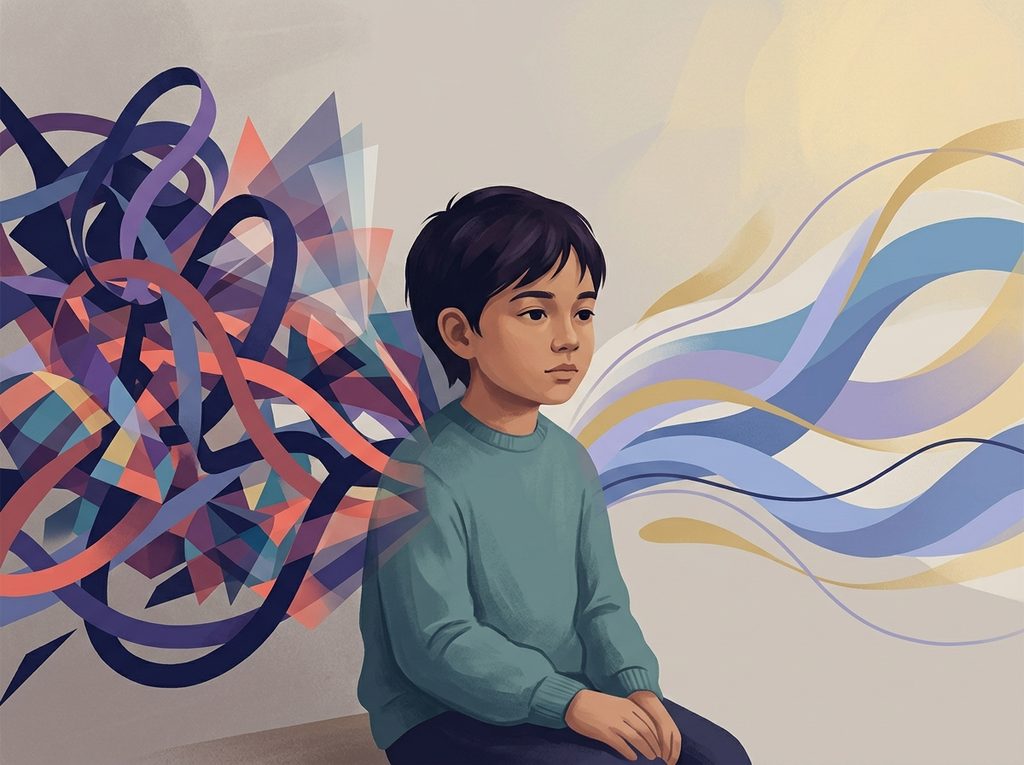
Parents looking for a horror-style jump-scare warning can relax somewhat: Inside Out 2 is not built around repeated, violent scares. Nevertheless, several scenes use sudden action, threatening environments or unexpected visual changes that may startle a sensitive child.
The main moments to watch for
The demolition of Headquarters: Riley’s familiar emotional control room undergoes a major upheaval as new emotions arrive. The sudden disruption, noisy activity and destruction of a familiar environment may feel intense for children who dislike chaos or unexpected changes.
The frightening contents of the Deep Vault: The film explores memories and secrets Riley would rather avoid. Some imagery is deliberately mysterious or unsettling, particularly when the characters encounter a dark secret.
The Sar-Chasm sequence: Characters face a dangerous-looking drop into a deep chasm. The visual scale and threat of falling may be uncomfortable for children with a fear of heights or falling.
Chases, falls and explosive escapes: The story includes fast-moving action, perilous situations and dynamite-related sequences. These are presented as animated adventure rather than realistic violence, but the sudden movement and danger can still be startling.
Is there a major horror scene?
Not in the conventional sense. Parents should not expect a film filled with realistic monsters, graphic injuries or relentless horror. The concern is more about suspense, threatening imagery and how those moments combine with sound and music.
Parent tip: If your child is frightened by sudden changes, dark rooms or characters in danger, watch the film together and be ready to pause during the more intense sequences.
2. Anxiety and Panic-Like Scenes: The Film’s Biggest Emotional Trigger
This is the most important section for parents of anxious children.
Anxiety is not merely a background character in Inside Out 2. She becomes central to Riley’s experience as Riley worries about friendships, performance and whether she will be accepted by older peers.
At first, Anxiety believes that anticipating problems will protect Riley. But her efforts become excessive. She begins planning for every possible failure, pushing aside other emotions and making Riley increasingly distressed.
The film’s most intense emotional sequence occurs when Riley’s worries spiral out of control and she experiences what appears to be an anxiety or panic attack.
Why this scene may upset some children
- Rapid escalation: Riley’s worries accumulate instead of resolving one at a time.
- Loss of control: Anxiety dominates the emotional Headquarters, making the situation feel increasingly difficult to manage.
- Physical distress: Riley’s visible emotional state becomes intense, which may be unsettling for children familiar with panic symptoms.
- Overwhelming thoughts: The story visualises the way worries can multiply and reinforce one another.
- Social pressure: Riley’s distress is connected to wanting to fit in and fearing that she will disappoint others.
Children who have experienced panic-like symptoms may recognise elements of Riley’s distress. That recognition can be validating, but it can also be uncomfortable.
A child who has never experienced anxiety may still find the scene frightening because the film makes Riley’s internal turmoil visually dramatic.
Does the movie teach children that anxiety is bad?
Not exactly. One of the film’s strengths is that Anxiety is not portrayed as an inherently evil emotion. She wants to protect Riley, but her strategy becomes harmful when she tries to control everything.
The broader message is that all emotions have a place, and that no single emotion should define a person’s entire identity.
Parents can use this distinction to explain that feeling anxious before a match, an exam or a new social situation is normal. The goal is not to eliminate anxiety but to respond to it in a helpful way.
3. Loud Audio Triggers and Sensory Overload
Although Inside Out 2 is not a traditional sensory-horror film, its action and emotional sequences can be intense for children who are sensitive to sound or fast-moving visuals.
The film includes energetic music, rapid dialogue, dramatic sound effects, crashes, explosive action and sequences in which the characters move quickly through Riley’s mind.
The sensory experience will also depend on the version being watched, the playback equipment, the volume setting and the viewing environment.
Potential sensory triggers
| Sensory element | What may be difficult |
|---|---|
| Sudden sound effects | Unexpected crashes, blasts or sharp changes in audio |
| Dramatic music | Rising tension that signals something bad may happen |
| Rapid scene changes | Difficulty processing several events in quick succession |
| Busy visuals | Numerous characters, movements and colourful effects competing for attention |
| Intense emotional dialogue | Raised voices, arguments and rapidly escalating distress |
These are practical viewing considerations, not a claim that the film has been officially classified as a sensory-triggering movie.
Is Inside Out 2 suitable for children with sensory sensitivities?
Possibly, but the child’s specific sensitivities matter. A child who mainly struggles with loud noises may do well with reduced volume and breaks. A child who becomes distressed by unpredictable action, rapid visual changes or emotional escalation may need closer supervision or a different viewing choice.
Parents can make the experience more comfortable by:
- Lowering the volume before the film begins.
- Using subtitles if they help the child follow dialogue without increasing the volume.
- Watching in a quiet room with reduced background distractions.
- Keeping the remote accessible so the film can be paused immediately.
- Avoiding an unnecessarily large screen or immersive sound setup if these increase discomfort.
There is no need to finish the movie in one sitting. A pause is a perfectly reasonable response when a child becomes overwhelmed.
4. Dark Themes: Social Rejection, Embarrassment and Fear of Failure
Unlike a film that relies on villains or physical danger, Inside Out 2 draws much of its tension from everyday childhood and teenage worries.
Riley wants to belong. She cares about what other people think, wants to impress the right people and becomes increasingly concerned about making mistakes.
These are familiar experiences, but the film amplifies them to show what happens when the need for acceptance begins to dominate a person’s decisions.
Social rejection and friendship anxiety
Riley worries about her friendships and the possibility that she may no longer fit in with the people she admires. Children who have experienced bullying, exclusion or friendship difficulties may relate strongly to these moments.
Embarrassment and self-consciousness
Embarrassment becomes a literal character in Riley’s mind. The film uses humour to portray the discomfort of being noticed, making mistakes or feeling exposed in front of other people.
For some children, this is funny. For others, particularly those who fear being laughed at, it may be painfully familiar.
Perfectionism and performance pressure
Riley’s hockey camp experience creates pressure to impress others. Her desire to succeed becomes entangled with worries about her identity and social standing.
Children who feel they must always achieve high marks, win competitions or satisfy adults may recognise this pattern.
A changing sense of self
The film also explores the idea that a person is more complicated than a single characteristic or achievement. Riley must learn that she can make mistakes, experience difficult emotions and still be worthy of friendship and acceptance.
This is a constructive message, but parents should remember that younger viewers may need help understanding it.
Parent tip: If your child becomes upset by embarrassment or rejection, reassure them that mistakes are normal and that their worth does not depend on popularity, performance or approval from friends.
5. Violence, Peril and Disturbing Visuals
Inside Out 2 contains fantasy action rather than graphic violence. The characters encounter dangerous environments, falls, chases, destruction and explosive escapes.
Most of these moments are presented with humour or adventure. Serious injuries are not the focus of the story.
However, parents should consider more than whether a film shows blood or physical harm. A child can find a scene upsetting simply because a character appears trapped, lost or unable to escape.
What to expect
- Characters falling from heights or facing dangerous drops.
- Chases and attempts to escape threatening situations.
- Destruction inside Headquarters.
- Dynamite used in cartoon-style escape sequences.
- Arguments and conflict between the emotions.
- A dark and mysterious environment associated with Riley’s buried secrets.
There is also a brief skeleton image noted in published parental guidance.
For most viewers, these elements are likely to register as animated adventure. For a child who fears heights, confinement, destruction or losing control, they may be more troubling.
The film’s PG rating does not mean that every scene will feel gentle to every child.
6. Language, Romance and Other Content Parents May Want to Know About
Parents who are mainly concerned about explicit content may find Inside Out 2 relatively mild compared with many films aimed at older teenagers.
Common Sense Media describes the language as limited, noting occasional words such as “jerk” and “moron,” along with comic substitute swearing.
Romantic content is minimal. Riley experiences a crush-related storyline, and her imagination includes a monument called Mount Crushmore. The film does not centre on sexual relationships.
Other details include Anxiety drinking energy drinks in a way that humorously resembles someone consuming something stronger. The context is comedic rather than a realistic depiction of substance misuse.
Overall, the primary concern for parents of anxious children is not profanity, sexual content or realistic violence. It is the emotional pressure and distress experienced by Riley.
7. How to Prepare an Anxious Child Before Watching
A few simple steps can help children approach the film with greater confidence.
Before the movie
Explain that Riley is growing up and experiencing new feelings. Let your child know that some scenes show her becoming overwhelmed, but that the story explores how she can learn to understand herself.
If your child has experienced anxiety, avoid presenting the film as a test of whether they can cope with difficult material. They should feel free to ask questions or stop watching.
During the movie
Watch for signs that your child is uncomfortable, including covering their ears, turning away, becoming unusually quiet, asking repeated questions about danger or wanting to leave.
You do not need to explain every scene while it is happening. Sometimes a brief reassurance is enough; at other times, pausing the film gives a child the space they need.
After the movie
Talk about what Riley experienced and what helped her regain balance.
Useful questions include:
- Why do you think Anxiety wanted to control everything?
- Can worrying sometimes help us prepare, and when can it become too much?
- What could Riley have done when her worries started building?
- Is it possible to feel anxious and still be brave?
- Who could Riley talk to when she felt overwhelmed?
Keep the discussion open rather than treating it as a lesson the child must get right.
If your child has ongoing anxiety that interferes with everyday life, a film is not a substitute for appropriate support from a qualified professional.
Is Inside Out 2 Suitable for Your Child? A Practical Age Guide
There is no universal age at which every child becomes ready for the film. The following guidance is a cautious starting point, not an official age classification.
| Age group | General recommendation |
|---|---|
| Under 5 | Consider a gentler alternative, particularly for children sensitive to suspense or emotional distress |
| 5–7 | Preview the film if possible; watch together and be prepared to pause |
| 8–10 | Often a reasonable choice with parental guidance, depending on the child’s sensitivities |
| 11–13 | Many children may appreciate the friendship, identity and anxiety themes, although some scenes may still feel intense |
| 14+ | Generally easier to contextualise, but individual sensitivities remain important |
Children with anxiety are not all alike. Some may appreciate seeing their feelings represented on screen, while others may prefer to avoid an intense depiction of panic.
The most useful question is not simply whether your child is old enough. It is whether they are comfortable with the film’s particular themes and presentation.
Frequently Asked Questions
Does Inside Out 2 have jump scares?
It is not a conventional horror movie, and repeated jump scares are not its main feature. However, sudden action, threatening imagery, dramatic sound effects and dangerous situations may startle sensitive children.
Does Inside Out 2 show a panic attack?
Riley experiences a sequence that appears to depict an anxiety or panic attack as her worries spiral out of control. The scene is emotionally intense and may be particularly difficult for children who have experienced similar symptoms.
Is Inside Out 2 too scary for a 6-year-old?
Some six-year-olds may enjoy it with an adult, while others may find the anxiety sequence, suspense and dangerous situations upsetting. Previewing the film and watching together are sensible precautions.
Is Inside Out 2 good for children with anxiety?
It can encourage useful conversations about worry, self-acceptance and emotional regulation. However, its intense portrayal of anxiety may be uncomfortable for some children. Consider your child’s response to similar themes rather than assuming the film will be therapeutic for everyone.
Are there loud noises in Inside Out 2?
The film contains dramatic music, crashes, explosive action and sudden sound effects. Children who are sensitive to loud or unpredictable sounds may benefit from reduced volume, a quieter viewing environment and the option to pause.
Does Inside Out 2 have a happy ending?
The story ultimately moves towards acceptance of Riley’s complex identity and the need for her emotions to work together. The journey includes intense distress before the resolution, so a reassuring ending does not mean every preceding scene will be comfortable for every child.
The ToonTycoon Verdict: Should You Press Play?
Inside Out 2 offers a thoughtful message: anxiety is a human emotion, not a personal failure. Riley’s story can help families discuss friendship, perfectionism, social pressure and the importance of accepting every part of ourselves.
But the film’s greatest strength is also its biggest consideration for sensitive viewers. It makes anxiety vivid, dramatic and emotionally recognisable, especially during Riley’s escalating distress.
For many school-age children, watching with a parent can turn these scenes into an opportunity for understanding. For younger children or those who find panic, rejection or sensory overload especially upsetting, previewing the movie or choosing a gentler alternative may be the better option.
Our advice is simple: know the scenes that may be difficult, keep the viewing experience flexible and let your child decide when they need a break.
The best family movie night is not the one where everyone finishes the film. It is the one where every child feels safe enough to speak up.
For further information, consult Disney’s official Inside Out 2 page and Common Sense Media’s detailed parents’ guide.