
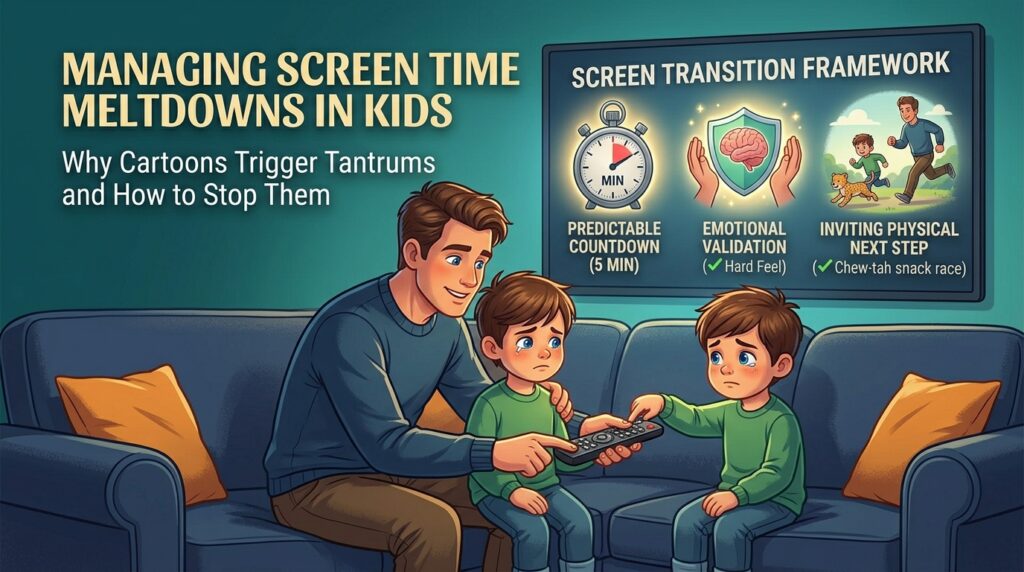
If you have ever clicked “pause” on a Saturday morning cartoon only to watch your child dissolve into a full-scale emotional explosion, you are far from alone. Across households worldwide, managing screen time meltdowns in kids has quietly become one of the most frustrating, exhausting daily hurdles of modern family life. You give a gentle warning: “Five more minutes, then we turn off the TV.” The time arrives, the screen goes dark, and suddenly your sweet-natured preschooler or kindergartener is screaming, kicking, or refusing to cooperate. It feels entirely disproportionate to the situation, leaving parents questioning whether animated media is doing more harm than good.
At ToonTycoon, we believe that understanding why these meltdowns happen changes everything. When parents shift from viewing tantrums as willful defiance to recognizing them as nervous system overload, managing screen time meltdowns in kids becomes much easier with predictable routines, gentle transitions, and clear communication. In this comprehensive, expert-backed guide, we will explore the underlying neurology of screen transitions, common parenting pitfalls, and actionable ECE strategies dedicated to managing screen time meltdowns in kids once and for all.
1. The Neuroscience Behind the Screen: Why Cartoons Trigger Intense Reactions
To understand why turning off a favorite animated show causes such an intense reaction, we have to look inside the developing brain. Modern animation is brilliantly paced, packed with vibrant colors, fast scene cuts, and rewarding musical scores designed to keep young eyes glued to the display.
When a child watches a screen, their brain releases a steady stream of dopamine—the neurotransmitter responsible for pleasure, motivation, and reward.
- The Abrupt Dopamine Drop: When you abruptly turn off the television, the child’s dopamine levels experience an immediate, sharp drop. For a young brain whose prefrontal cortex is still maturing, this abrupt chemical shift registers physically as acute distress.
- The Hyper-Focus Trap: Animated storytelling absorbs a child so completely that their awareness of their physical surroundings drops to zero. Snapping them out of that trance feels jarring—akin to waking an adult abruptly from a deep, mesmerizing dream.
Recognizing that tantrums are a physiological reaction rather than bad behavior is the foundational pillar of successfully managing screen time meltdowns in kids. When we approach the moment with empathy rather than frustration, we keep our own emotional equilibrium intact.
2. Common Parenting Pitfalls That Make Screen Transitions Worse
Before exploring effective solutions, it helps to examine common habits that inadvertently trigger resistance. When parents try managing screen time meltdowns in kids, certain knee-jerk reactions often make the tantrums worse:
- The Cold Turkey Approach: Snapping the screen off mid-scene without warning gives a child’s nervous system zero time to adjust.
- Bargaining and Empty Threats: Saying “If you don’t turn it off right now, no TV for a month!” creates high-stress power struggles that escalate anxiety.
- The Screen-as-Reward Trap: Treating media like a fragile, highly volatile prize increases its emotional value, making kids cling to it desperately out of fear of loss.
Avoiding these traps is crucial for managing screen time meltdowns in kids without descending into shouting matches.
3. The ECE Transition Playbook: Step-by-Step Strategies for Success
Eliminating screen-time battles doesn’t require throwing away your television or banning weekend movie nights. Instead, it requires building predictable, low-stress transition bridges. Here are four practical, ECE-approved strategies dedicated to managing screen time meltdowns in kids:
A. Use Visual and Auditory Countdown Timers
Young children struggle to conceptualize abstract time. Saying “Five minutes left” means very little to a four-year-old.
- Use a physical visual timer (like a Time Timer) or a fun kitchen timer that the child can hear and watch.
- Give two clear milestones: “When the timer beeps after this song finishes, the screen goes to sleep.” This method shifts the authority from you (the parent who is taking something away) to the clock (an impartial boundary).
B. Anchor the Transition to a Fun, Physical Next Step
Never ask a child to simply stop watching and sit in silence. Transitioning away from a screen must lead toward something engaging.
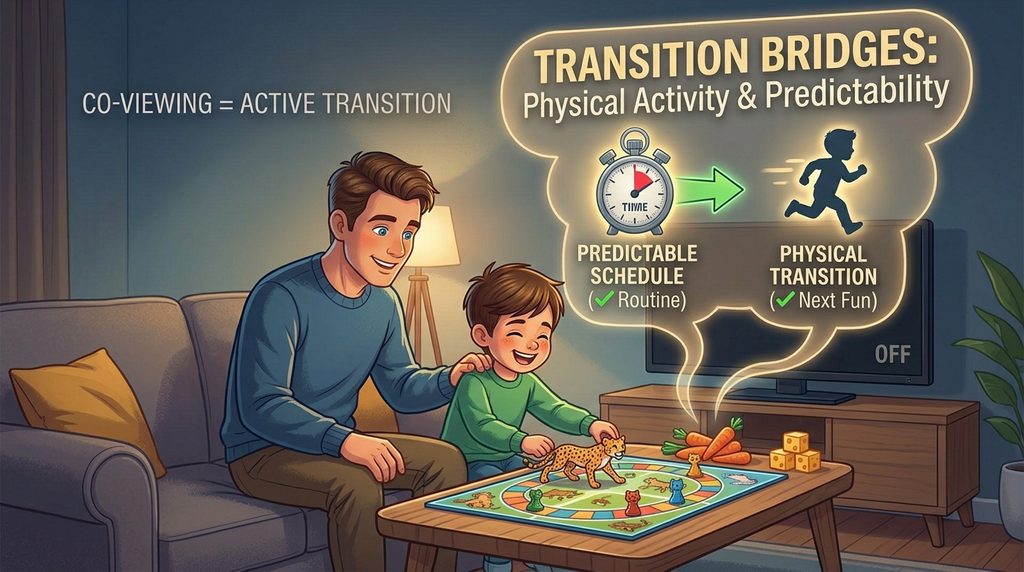
- Pair screen shutdown with an inviting physical activity: “As soon as the TV turns off, let’s race like cheetahs to the kitchen to build our snack tower!”
- Give the child ownership over the remote or power button: letting them press the physical button to turn off the TV builds a sense of agency and control.
C. Validate the Disappointment Without Yielding
When the tears start, resist the urge to lecture or mock their frustration (“It’s just a cartoon!”). Instead, practice emotional validation:
- “I know, it is so hard to turn off the show when it was getting exciting. You wanted to keep watching. I’d feel sad too.”
- Holding a calm, compassionate boundary teaches children that big feelings are acceptable, even when the rule doesn’t change.
D. Establish Predictable Media Windows
Children thrive on predictability. When screen time happens at haphazard times during the day, anxiety spikes because they never know when it will end. Set consistent, predictable windows (e.g., one episode after homework or family movie night on Friday) so expectations are clear.
4. Emotional Regulation and Validation Techniques for Parents
Mastering the art of managing screen time meltdowns in kids also requires looking inward at our own responses as parents. When a child screams because an episode of their favorite animated series has ended, our immediate adult instinct is often to react with defensiveness or annoyance.
However, emotional contagion is very real in early childhood. If a parent meets a child’s dysregulation with anger, the child’s nervous system senses a threat and the meltdown intensifies. Successful managing screen time meltdowns in kids relies heavily on a concept known as co-regulation:
- Lower Your Posture: Kneel down to your child’s eye level rather than towering over them.
- Soften Your Voice: Speak in a slower, lower tone. This acoustic shift acts as a natural anchor for an overstimulated nervous system.
- Offer Physical Comfort: If the child is receptive, a gentle hand on the shoulder or a warm hug helps release oxytocin, counteracting the stress hormones of the dopamine drop.
5. Building a Predictable Daily Media Routine
Routine is the ultimate antidote to anxiety. One of the most effective long-term methods for managing screen time meltdowns in kids is embedding media consumption inside a rigid daily rhythm.
When television viewing is tied to specific triggers—such as finishing breakfast, completing afternoon quiet time, or scheduled Friday movie nights—children stop negotiating. They know when screens happen, they know how long they last, and most importantly, they know what comes next. Be sure to explore our Parents’ Guides for additional frameworks on structuring daily schedules and selecting age-appropriate runtimes.
6. Frequently Asked Questions About Managing Screen Time Meltdowns
To help you further, here are answers to common questions regarding managing screen time meltdowns in kids:
Why do some animated shows cause worse meltdowns than others?
Shows featuring rapid scene cuts, high-frequency sound design, and continuous cliffhangers stimulate the brain more intensely. Managing screen time meltdowns in kids often becomes much easier when parents curate slower-paced, gentle animation styles that do not overstimulate the nervous system.
Is it a good idea to use screen time as a bargaining chip?
Using screens as a reward or punishment often backfires. Managing screen time meltdowns in kids is most successful when media is treated as a neutral, scheduled activity rather than a fragile privilege tied to behavioral obedience.
How long does it take for children to adjust to new screen rules?
Most children experience an extinction burst—meaning behavior temporarily worsens before it improves—when new boundaries are introduced. Consistently applying the transition strategies for managing screen time meltdowns in kids typically yields noticeable peace within 7 to 10 days.
7. How ToonTycoon Supports Balanced Family Media Habits
At ToonTycoon, our reviews and parental guides are built to support healthy, balanced media habits in your household. Whether you are browsing our Studio Releases for family movie night or reading our expert developmental breakdowns, our goal is to make animation a source of connection rather than conflict.
By trading sudden power struggles for gentle, structured routines, managing screen time meltdowns in kids transforms from a daily battle into a smooth, peaceful part of your family’s daily rhythm.