
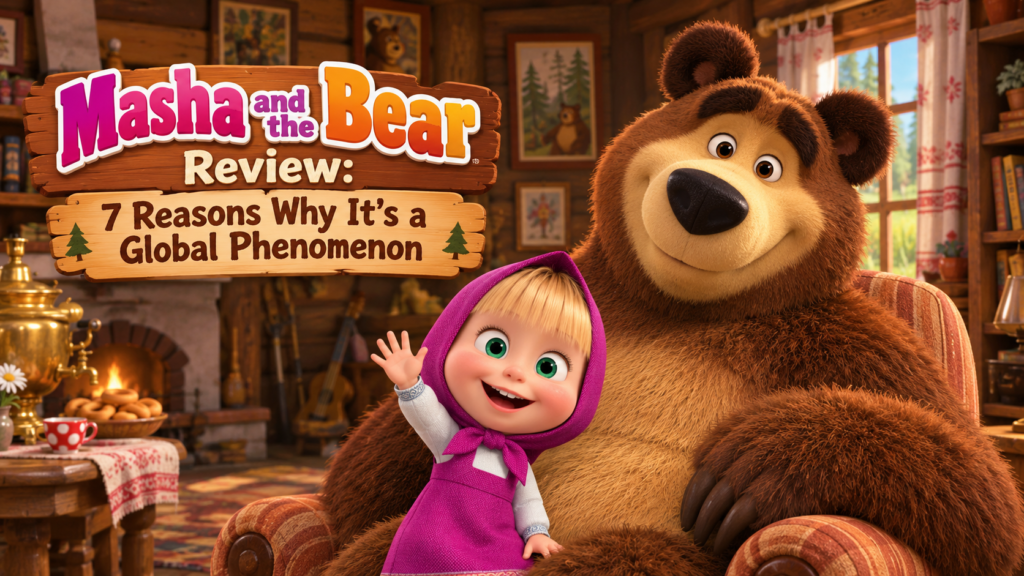
A massive juggernaut in global preschool entertainment, our Masha and the Bear review breaks down how Animaccord’s world-famous 3D animated series captured the hearts of millions of families on Netflix. Created by Oleg Kuzovkov and inspired by classic folklore, this high-energy slapstick comedy delivers a charming blend of physical humor, musical joy, and cross-generational appeal.
In this comprehensive Masha and the Bear review, we evaluate how the show balances silent-comedy slapstick—reminiscent of Tom and Jerry or Charlie Chaplin—with sweet, parent-child dynamics. Readers exploring our Masha and the Bear review will see why its universal visual language allows toddlers and parents around the world to enjoy every episode without needing heavy dialogue. Any detailed Masha and the Bear review must praise its crisp 3D CGI rendering and expressive character animation.
As analyzed throughout this Masha and the Bear review, the core dynamic follows Masha, an endlessly energetic four-year-old girl in a pink kerchief, and Bear, a gentle retired circus performer who acts as her patient protector. This Masha and the Bear review also details how supporting woodland characters—from hungry wolves to mischievous bunnies—add variety to their forest adventures. Furthermore, our Masha and the Bear review highlights how the bouncy orchestral score keeps younger audiences glued to the screen.
From chaotic jam-making sessions to high-speed sledding on winter slopes, the series maintains an engaging pace, an achievement we celebrate in this Masha and the Bear review. As emphasized throughout this Masha and the Bear review, the show gives toddlers an outlet for imaginative fun while teaching gentle lessons on patience, forgiveness, and responsibility. In addition, our Masha and the Bear review examines why its short episode runtimes make it a top pick for modern family streaming.
Whether you are looking for a reliable toddler favorite on Netflix or exploring peak international preschool programming, this in-depth Masha and the Bear review provides all the key insights. Ultimately, this Masha and the Bear review confirms that Animaccord created an enduring animated classic, making every observation in our Masha and the Bear review valuable for parents and animation enthusiasts.
Table of Contents
- Quick Facts
- Story and Premise
- Animation and Visuals
- Main Characters
- Direction and Writing
- Music and Sound
- Themes and Lessons
- What Works Best
- What Could Improve
- Family Viewing Guide
- Final Verdict
- ToonTycoon Rating Table
- Frequently Asked Questions
Quick Facts
| Detail | Information |
| Show Title | Masha and the Bear (Маша и Медведь) |
| First Released | 2009–Present |
| Streaming Platform | Netflix (Global Distribution) |
| Production Studio | Animaccord Animation Studio |
| Creator | Oleg Kuzovkov |
| Genre | Preschool, Slapstick Comedy, Family, 3D CGI Animation |
| Episode Runtime | ~7–8 minutes per episode |
| Content Rating | TV-Y (Suitable for all ages) |
| Main Cast | Elsie Fisher / West Rubin (Masha – English dub), Boris Kutnevich (Bear) |
Story and Premise
Deep in a picturesque European forest near a quiet train station lives Masha, a hyperactive, sweet-toothed, four-year-old girl who wears a magenta dress and matching headscarf. Bored and eager to play, Masha wanders into the woods and stumbles upon the cozy tree-house home of Bear, a retired circus performer who enjoys peaceful hobbies like gardening, tea drinking, fishing, and playing chess.
Though Masha’s chaotic energy regularly turns Bear’s immaculate home upside down, Bear quickly develops a warm, fatherly affection for her. Episodes follow the pair as Masha’s curious ideas spark hilarious mishaps—such as cooking massive pots of porridge, learning to skate, or staging puppet shows—forcing the patient Bear to step in, clean up the mess, and keep Masha safe from her own mischief.
Animation and Visuals
Animaccord set a new benchmark for international 3D CGI television animation:
- Rich Environmental Lighting: The forest landscapes change with four distinct seasons, showcasing warm autumn leaves, crisp winter snow drifts, and vibrant spring flowers.
- Tactile Character Textures: Bear’s fur, Masha’s fabric clothing, and wooden furniture feature realistic textures and physics that enhance the show’s quality.
- Exaggerated Physical Comedy: Smooth squash-and-stretch principles give every slip, tumble, and double-take classic slapstick energy.
Main Characters
- Masha: A fearless, highly curious 4-year-old girl whose boundless energy and demand for fun drive every story.
- Bear (Mishka): A gentle, giant brown bear who acts as Masha’s guardian, mentor, and best friend.
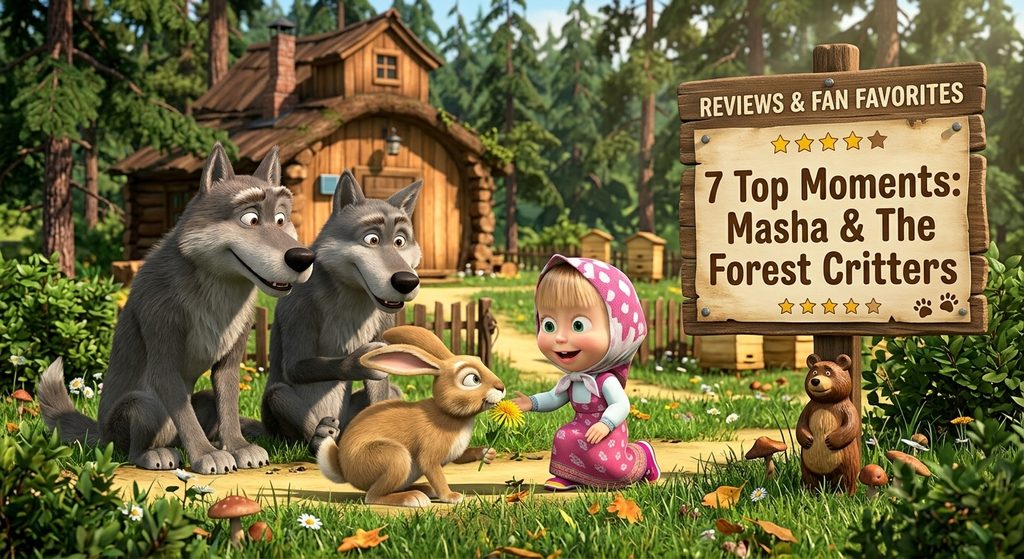
- The Forest Animals: A colorful supporting cast including two hungry wolves who double as forest paramedics, a rival female bear, an energetic panda cousin, and a timid bunny.
Direction and Writing
Creator Oleg Kuzovkov crafted a storytelling format that relies heavily on pantomime and visual narrative rather than heavy dialogue. The writers structure short 7-minute arcs that build from a simple situation—like painting a picture or catching a fish—into a crescendo of comical chaos, concluding with a heartwarming moment between Masha and Bear.
Music and Sound
- Orchestral Slapstick Cues: Upbeat, accordion-and-brass-heavy melodies match Masha’s erratic movements and emphasize comedic beats.
- Catchy Musical Numbers: Standout episodes feature original songs that young toddlers quickly learn and sing along with.
Themes and Lessons
- Unconditional Love & Patience: Bear demonstrates endless parental patience, showing that love remains steadfast even during chaotic moments.
- Learning Through Play: Celebrates childhood curiosity while showing that actions have natural consequences.
- Forgiveness & Helpfulness: Emphasizes helping friends fix mistakes and sharing with others.
What Works Best
- Universal Visual Humor: Dialogue-light slapstick ensures kids of any culture or language can follow every joke effortlessly.
- Relatable Parent-Child Dynamic: Parents strongly identify with Bear’s desire for quiet time, while kids see themselves in Masha.
- Bite-Sized Episode Runtimes: 7-minute segments fit seamlessly into short toddler viewing sessions.
- Vibrant 3D Production Values: High visual detail sets it apart from standard low-budget preschool CGI.
- Memorable Musical Tracks: Upbeat tracks add extra entertainment for toddlers.
What Could Improve
- Masha’s Behavior Can Be Boundary-Testing: Very young toddlers may imitate Masha’s bossy or loud antics at home.
- Repetitive Episode Formula: Watching several episodes back-to-back can feel formulaic for adult co-viewers.
Family Viewing Guide
- Recommended Age: 2+ years old. Designed specifically for toddlers, preschoolers, and early elementary children.
- Violence and Action: Broad cartoon slapstick—bouncing off trees, falling over snowbanks, and flying objects. Zero blood or actual injury.
- Scary or Intense Scenes: Completely non-threatening. Even the forest wolves are goofy and harmless.
- Language: Rated TV-Y. Clean dialogue throughout.
- Positive Messages: Promotes forgiveness, creativity, outdoor play, and family bonding.
Final Verdict
ToonTycoon Verdict: Highly Recommended
Masha and the Bear is a masterclass in visual comedy for young children. Combining charm, top-tier CGI animation, and a relatable bond between a curious little girl and her protective bear, it remains an absolute staple for family streaming queues on Netflix.
ToonTycoon Rating Table
| Category | Rating |
| Animation & Visuals | 9.3/10 |
| Story & Writing | 8.7/10 |
| Characters | 9.2/10 |
| Music & Sound | 9.0/10 |
| Toddler Appeal & Family Entertainment | 9.6/10 |
| Overall ToonTycoon Rating | 9.2/10 |
ToonTycoon Verdict: Highly Recommended
Frequently Asked Questions
What age is Masha and the Bear appropriate for?
It is rated TV-Y and tailored for toddlers and preschoolers aged 2 to 6.
Where can I stream Masha and the Bear?
Multiple seasons and specials stream globally on Netflix.
Does Bear talk in Masha and the Bear?
No, Bear does not speak human words. He communicates through grunts, gestures, pantomime, and expressive facial reactions.